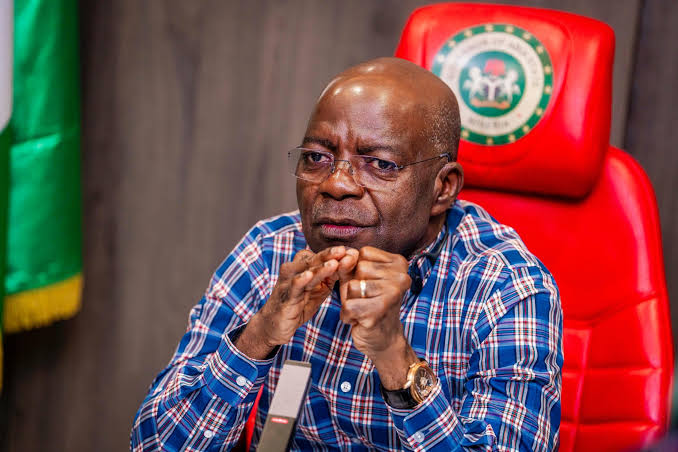
Political tension is steadily building in Abia State ahead of the 2027 general elections, following moves by former governors and opposition figures to challenge the re-election bid of Governor Alex Otti. The development has triggered a flurry of political meetings, public statements, and sharp exchanges between the ruling administration and its critics.
Two former governors of the state, Senator Orji Uzor Kalu and Chief Theodore Ahamefule Orji, recently announced the formation of a political alliance aimed at unseating Otti in 2027. The duo, alongside other former political leaders, said the alliance would work to secure all elective positions in Abia State for the All Progressives Congress, APC. They unveiled the coalition during a meeting in Umuahia, describing it as a platform for experienced leaders seeking to reclaim political relevance in the state.
The former governors also signalled plans to initiate legal action against Otti, alleging that he runs the affairs of the state from his country home in Nvosi rather than the Government House in Umuahia. Senator Kalu dismissed narratives portraying past administrations as failures, insisting that successive governments contributed to the state’s development. He further accused Otti of underperforming, claiming that the governor was merely repainting roads constructed during his tenure and doing little with increased federal allocations.
Kalu said he would not support Otti’s re-election in 2027, despite backing him during the 2023 governorship election. He maintained that his decision was driven by party loyalty to the APC and dissatisfaction with what he described as the current administration’s limited achievements.
The accusations were swiftly dismissed by the Otti administration. The governor’s Special Adviser on Policies and Interventions, Rev. Fr. Christian Anokwuru, described the opposition’s moves as “chasing shadows,” arguing that former leaders who allegedly presided over Abia’s underdevelopment lack the moral standing to question the present government. He criticised what he called “name-dropping” of President Bola Tinubu and urged critics to account for their own records in office.
Political analysts have also weighed in on the unfolding rivalry. A public affairs analyst, Nduka Odo, said the alliance of former governors against Otti was largely driven by the protection of entrenched political and economic interests. He noted that Otti’s emergence disrupted a long-standing political succession pattern in the state and pointed to the abolition of salaries and allowances for former governors as a key factor fueling opposition against the incumbent.
Civil society groups have similarly downplayed the impact of the former governors’ criticisms. The President of the Civil Rights Realisation and Advancement Network, Olu Omotayo, said Otti’s performance should be judged by tangible development rather than political rhetoric. He argued that many residents of Abia State have acknowledged improvements in infrastructure and governance under the current administration, insisting that such public sentiment outweighs attacks from past office holders.
Also speaking, Onyebuchi Igboke, Project Manager of Advocacy Partnership for Good Governance, described the political clash as a struggle between performance-based governance and patronage politics. He said Otti’s visible projects and reforms within just over two years in office compare favourably with the combined years of previous administrations, adding that attempts to discredit the governor are unlikely to erode public confidence.
As Abia State inches closer to the 2027 polls, the emerging battle lines suggest a fiercely contested political landscape, with former power brokers seeking a comeback and an incumbent governor banking on his record in office to secure a second term.