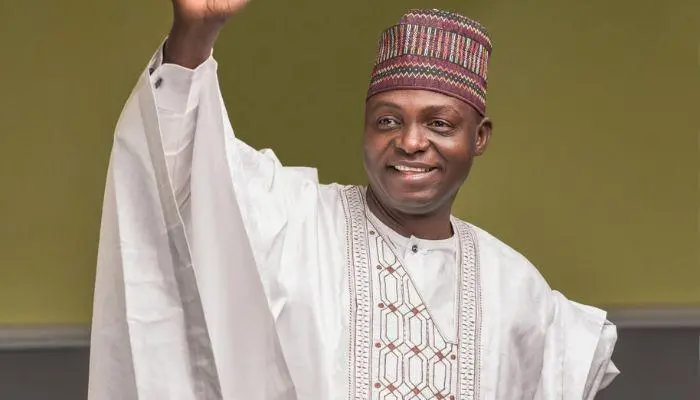
in a surprising political twist, the newly appointed National Chairman of the All Progressives Congress (APC), Professor Nentawe Yilwatda—a northern Christian hailing from Plateau State—has ignited renewed controversy over the possibility of a Muslim-Muslim presidential ticket in 2027. Yilwatda’s elevation, which follows the departure of Dr. Abdullahi Ganduje of Kano State due to ill health, was confirmed during an emergency meeting chaired by President Bola Tinubu at the Presidential Villa in Abuja. Previously serving as the Minister of Humanitarian Affairs and Poverty Reduction and representing the North Central region, Yilwatda’s appointment is widely viewed by political analysts as a calculated move that might signal the party’s willingness to revisit the strategy employed in 2023.
That earlier general election witnessed President Tinubu, a southern Muslim, pairing with Kashim Shettima, a northern Muslim—a decision that sparked intense debate about religious representation and inclusivity, particularly among Christian communities. Many critics argued that such a ticket not only risked alienating non-Muslim voters but also hinted at an underlying Islamisation agenda. This same sentiment has re-emerged as various groups, including influential northern Muslim factions like the Arewa Youth Movement and the Concerned Northern Muslim Ummah, have voiced opinions about achieving a religious balance. In statements released a few months ago, these groups urged President Tinubu to choose a running mate from the Christian community, asserting that while the Muslim-Muslim combination had worked politically in 2023, it might not be sustainable in the long run.
Amid growing internal debates, voices within the APC have also begun to weigh in. During a heated North-East APC stakeholders’ meeting in June, the conspicuous absence of Shettima’s name when endorsing Tinubu for a second term only deepened speculation about the party’s direction. Some insiders now see Yilwatda’s ascension as a potential precursor to retaining Shettima for the 2027 election—a move reminiscent of previous administrations, such as those led by former presidents Muhammadu Buhari and Olusegun Obasanjo, who maintained consistent running mates throughout their terms.
Social media reactions have mirrored this divided sentiment. A special aide to a prominent APC senator from Bauchi State, Ashiru Pandum, took to his X account to list the various key national positions occupied by Christians under the current administration—a move interpreted by many as a subtle nod towards a broader pattern of strategic Christian appointments amid a so-called “Muslim-Muslim presidency.” His remarks, however, were met with sharp criticism from some quarters. Prince Ikenga NwaChineke of the Obidient Movement argued that these appointments had failed to address Nigeria’s core issues such as insecurity and poverty, calling instead for a complete overhaul in the upcoming elections.
While prominent figures in Nigeria’s religious sphere remain divided on the issue, several voices have sought to ease the tensions. Rev. Joseph Hayab, Chairman of the Christian Association of Nigeria in Northern Nigeria, emphasized the need for thoughtful selection of leadership without prematurely inflaming religious divides. Similarly, Bishop Francis Wale Oke of the Pentecostal Fellowship of Nigeria contended that President Tinubu had already demonstrated fairness across religious lines, suggesting that the nature of the presidential ticket would not inherently harm governance. In contrast, Lagos CAN Chairman Bishop Stephen Adegbite and Methodist Archbishop Most Rev. Isaac Ayo Olawuyi cautioned against politicizing religious identity, urging Nigerians to focus on pragmatic issues rather than symbolic ticket configurations.
Adding another layer to the debate, the Catholic Bishops’ Conference of Nigeria has called for calm, advising observers to monitor political developments closely before drawing any firm conclusions. An aide to CAN President Archbishop Daniel Okoh reiterated that matters of running mate selection remain strictly within the purview of the APC, and that religious leaders should refrain from meddling in political decisions.
As Nigeria edges closer to the 2027 general elections, the appointment of Professor Yilwatda has not only restructured the APC’s internal power dynamics but has also reopened a charged discussion about faith, representation, and the future electoral strategy of the nation’s ruling party. The ongoing debate underscores the delicate interplay of religion and politics in Nigeria, with many wondering whether history will repeat itself or if new alliances and strategic shifts will redefine the country’s democratic landscape.