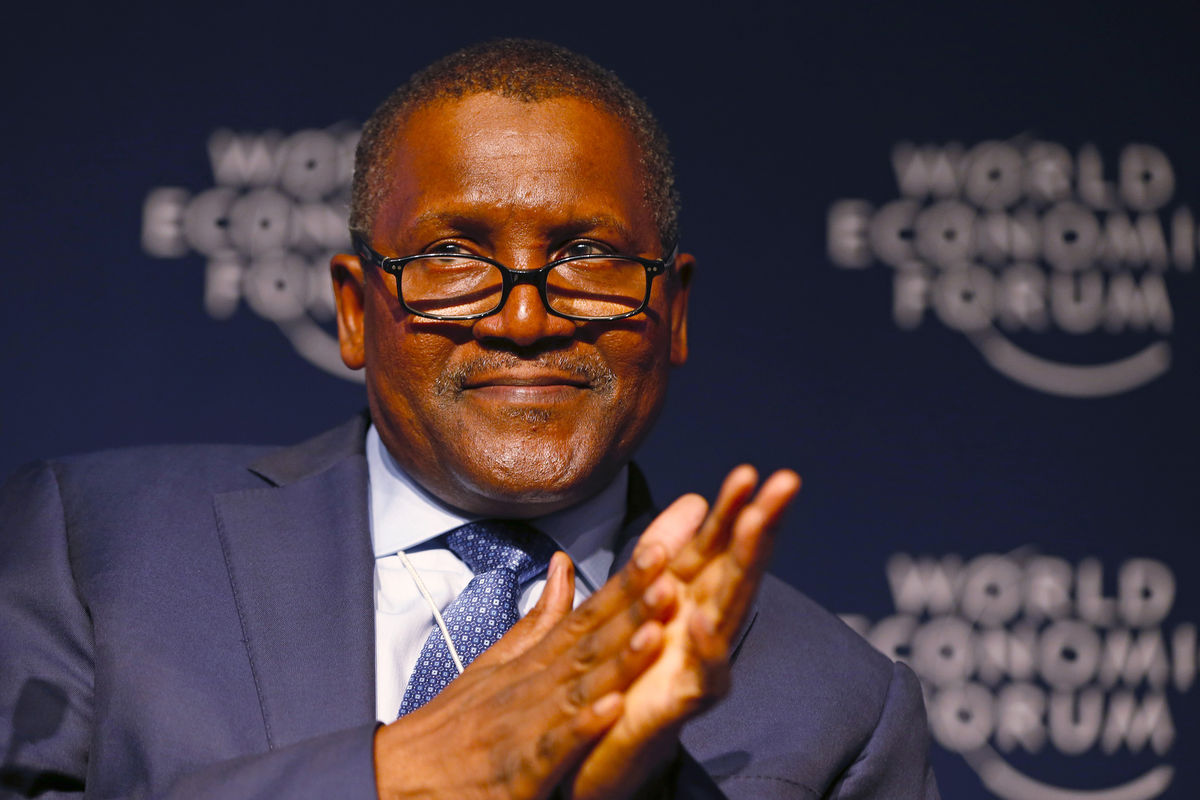
The House of Representatives Committee on Petroleum Resources (Downstream) has intervened in the escalating dispute between President of the Dangote Group, Aliko Dangote, and the Chief Executive Officer of the Nigerian Midstream and Downstream Petroleum Regulatory Authority (NMDPRA), Farouk Ahmed, urging both parties to suspend further public exchanges.
The committee summoned Dangote and the NMDPRA leadership to an emergency meeting, calling for restraint while lawmakers undertake a legislative review of the issues at the centre of the controversy.
Chairman of the committee, Ikenga Ugochinyere, said the intervention was necessitated by rising tensions generated by allegations and counter-allegations between the business mogul and the petroleum regulator, which he warned could threaten the relative stability recently achieved in the downstream sector.
Speaking to journalists on Monday, Ugochinyere said the committee was concerned about the timing and potential impact of the dispute on the petroleum industry.
“The key issue that prompted this emergency engagement is the growing tension in the downstream sector following concerns raised by Alhaji Aliko Dangote and responses from the NMDPRA,” he said. “This is happening at a time when the committee is deliberately working to protect the fragile stability in the sector.”
He explained that the National Assembly’s ability to broker a lasting resolution depended on first establishing the underlying causes of the disagreement.
“We can only achieve sustainable solutions when we clearly understand what is driving these allegations and counter-allegations. That is why both Alhaji Aliko Dangote and the leadership of the NMDPRA have been invited to appear before the committee,” he added.
Ugochinyere also appealed to both sides to refrain from media confrontations while the House conducts its intervention, warning that continued public statements could further inflame the situation.
“We have appealed to all parties to cease fire, particularly in the media. Continued exchanges could escalate the matter unnecessarily. The committee has the capacity to address these issues decisively,” he said.
According to the lawmaker, the committee has received petitions touching on key industry concerns, including the issuance of petroleum import licences and debates over whether domestic refineries can meet Nigeria’s daily fuel demand.
“These are serious matters, ranging from import licences to the capacity of local refineries to satisfy national consumption needs,” Ugochinyere noted.
He assured stakeholders that the committee would thoroughly examine all issues once Dangote, the NMDPRA, and other relevant actors appear before it, with the aim of developing long-term solutions for the sector.
Reiterating the appeal for restraint, the committee chairman urged both the regulatory authority and the refining community to halt further accusations in the national interest.
The feud between Dangote and Ahmed resurfaced after the businessman accused the NMDPRA boss of economic sabotage and claimed he paid about $5 million in tuition fees for Ahmed’s children—an allegation that has since sparked widespread public debate.