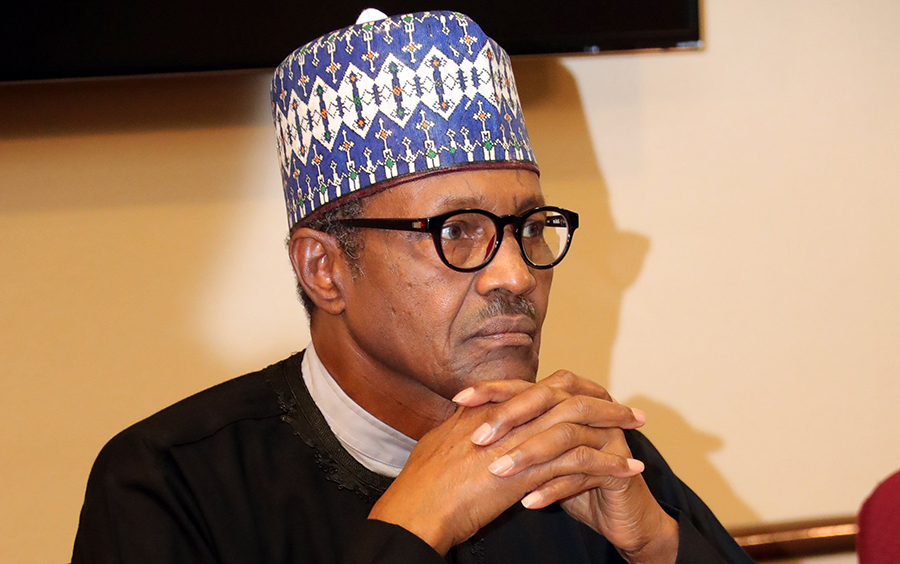
Nigeria’s former president, Muhammadu Buhari, has died in London at the age of 82 following a long battle with leukaemia, a type of blood cancer that had kept him away from public life for several months.
The news of Buhari’s death was officially confirmed by President Bola Ahmed Tinubu on Sunday evening. According to the presidency, the late leader passed away around 4:30 p.m. at a London medical facility. Tinubu, in response to the news, personally reached out to Buhari’s widow, Aisha Buhari, to extend his sympathies.
To facilitate the return of Buhari’s remains, Vice President Kashim Shettima has been assigned to travel to the United Kingdom. In honour of the late statesman, Tinubu has also ordered that Nigeria’s national flags be flown at half-mast nationwide.
Sources close to the late president revealed that leukaemia was the cause of death, a condition he had battled discreetly. Buhari’s declining health had been a subject of speculation for months, with reports indicating he had been moving in and out of intensive care in London hospitals in recent weeks.
Buhari, a retired general, first led Nigeria as a military ruler between 1984 and 1985 before returning decades later through democratic elections in 2015. He was re-elected in 2019 and concluded his second term in May 2023.
Confirmation of his passing was also released by his longtime aide, Garba Shehu, who said the family was grieving and hoped for the former president’s eternal rest.
Before his death, Buhari had withdrawn from public engagements, including the ECOWAS 50th anniversary event in Lagos, citing medical evaluations in the UK. At the time, he expressed regret over his absence, stating that health matters required him to remain abroad.
Buhari’s death comes days after reports disclosed that both he and former Head of State, Abdulsalami Abubakar, were gravely ill and receiving treatment in the UK. Sources within the presidency had described the conditions of both men as critical, worsened by age-related complications.
In recent weeks, President Tinubu had reportedly sent Vice President Shettima to visit the two former leaders in London, signalling growing concerns within Nigeria’s political elite about the deteriorating health of its elder statesmen.
A Presidency Marked by Medical Tourism
During his presidency, Buhari was frequently criticised for seeking healthcare overseas while Nigeria’s public health system remained underfunded and ill-equipped. His extended absences and undisclosed medical conditions often stirred public concern and debate.
Between 2016 and 2023, Buhari made several medical trips abroad, most notably to the United Kingdom. His first documented medical trip was in 2016, followed by multiple visits over the years, including two lengthy stays in 2017 totaling over 150 days.
At one point, Buhari spent 104 consecutive days in London for undisclosed medical reasons. His absence triggered widespread speculation, especially since little information was made public, and power was temporarily transferred to Vice President Yemi Osinbajo.
Despite mounting criticism, Buhari continued to travel to the UK for medical check-ups throughout his presidency, including in 2018, 2021, and again in 2022. His final known trip was in 2023 following the coronation of King Charles III, during which he underwent a dental procedure.
These trips, often accompanied by a full delegation and use of presidential aircraft, were estimated to have cost Nigerian taxpayers billions of naira. The expenses, alongside Buhari’s failure to build a world-class hospital at home as promised during his campaigns, became symbols of unmet expectations.
Critics, including civil society leaders and political opponents, viewed his medical travels as a contradiction of his vow to improve local healthcare. Human rights activist Omoyele Sowore and global health figures like Dr. Osahon Enabulele were vocal in condemning the precedent Buhari set.
The lack of transparency around his health mirrored a long-standing tradition among Nigerian leaders, who often keep their medical conditions private until their deaths.
While the government has yet to provide a detailed timeline for Buhari’s burial, plans are expected to be released shortly.
Buhari’s death marks the end of an era for Nigeria’s political history — one defined by military rule, democratic return, and controversy over leadership choices in both health and governance.