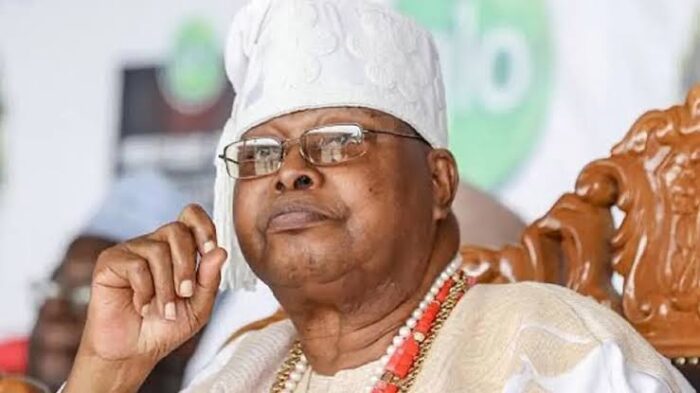
Oba Sikiru Kayode Adetona, the highly respected Awujale of Ijebuland, has passed away at the age of 91, drawing to a close a historic reign that began in 1960.
The confirmation of his death came from Governor Dapo Abiodun, who issued an official statement on Sunday evening from Abeokuta, expressing deep sorrow over the monarch’s passing and lauding his immense contributions to the state and the country.
Describing the revered traditional ruler as a “transformational figure,” the governor noted that Oba Adetona’s influence extended well beyond the borders of Ijebuland, shaping cultural, educational, and infrastructural growth in Ogun State and throughout Nigeria.
Governor Abiodun highlighted the monarch’s leadership as a symbol of cultural pride and progress, citing improvements in healthcare, education, and community development driven by the late king’s vision.
“Today, we mourn not only the loss of a royal father but the end of an era defined by wisdom, courage, and extraordinary service,” Abiodun said.
Oba Adetona’s reign witnessed the evolution of the Ojude Oba festival from a local celebration into an international cultural event, strengthening Ijebuland’s reputation as a center of heritage and commerce.
Tragically, the king’s death came on the same day as that of former President Muhammadu Buhari, who died in London after a long illness. Governor Abiodun referred to the day as a “double loss” for Nigeria.
A source close to the royal household revealed that the monarch breathed his last at his private residence in Ijebu-Ode. The news, though expected by some due to his recent public absence — including his nonappearance at the last Ojude Oba festival — was met with widespread grief.
The governor called on citizens to celebrate the life and legacy of Oba Adetona and to preserve the values he embodied during his six-decade reign on the throne.
As funeral plans are being arranged, tributes have begun pouring in from across the nation for a royal figure widely regarded as one of the longest-reigning and most influential traditional rulers in Nigeria’s modern history.