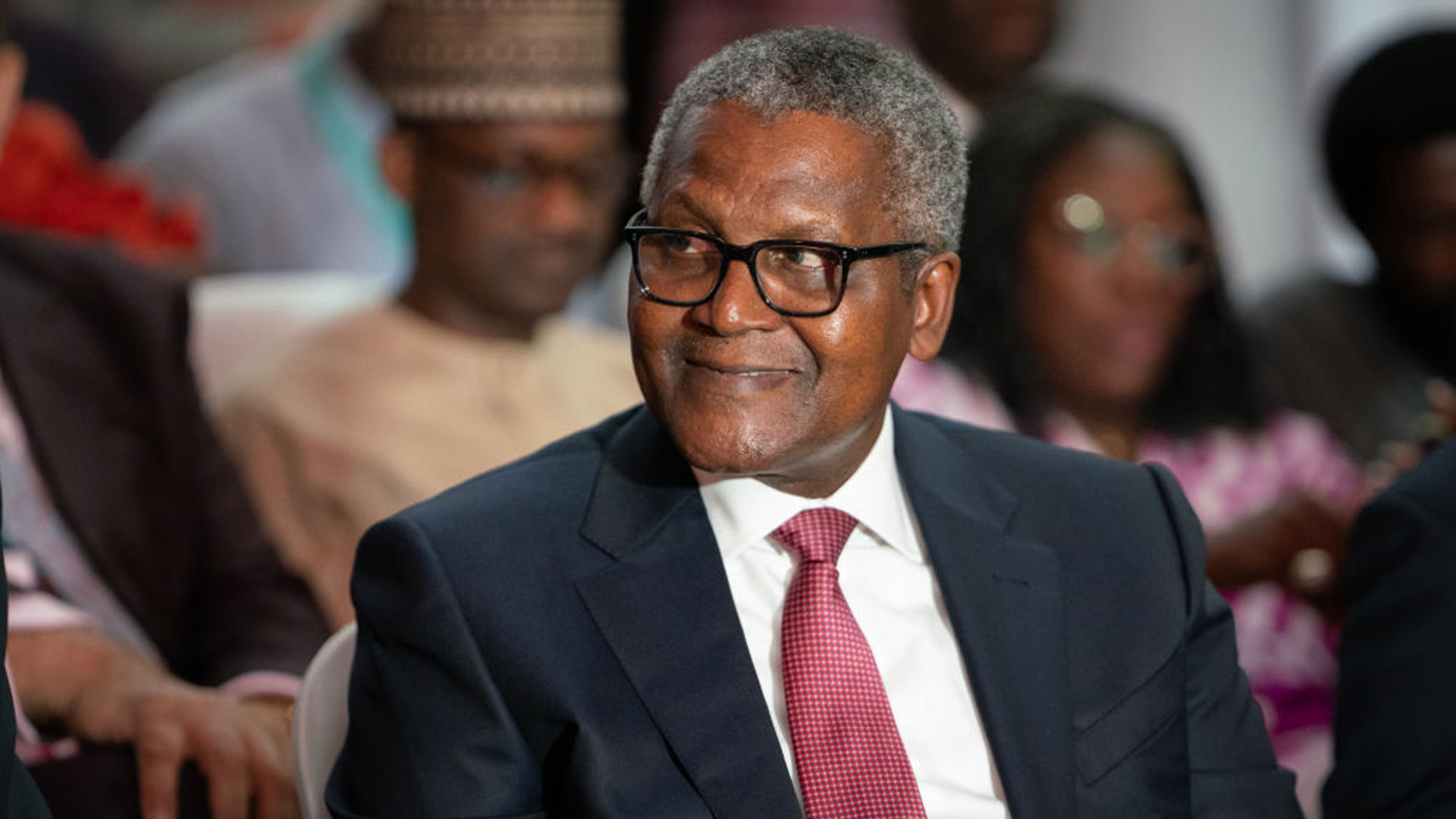
Aliko Dangote’s latest effort to reduce the cost of cooking gas in Nigeria has drawn sharp criticism from industry stakeholders, who fear the move could usher in monopolistic control of the country’s Liquefied Petroleum Gas (LPG) market. The billionaire industrialist announced during a recent visit to his Lekki-based refinery that his company now produces over 22,000 tonnes of LPG daily and intends to lower prices significantly. Speaking to a group from Lagos Business School’s CGEO Africa initiative, Dangote said around 2,000 tonnes are being released each day, with the goal of making the product affordable to the average Nigerian. He lamented that the current retail price of cooking gas, which ranges between ₦1,000 and ₦1,300 per kilogram, is too high for most households and pledged to drive the cost down.
Dangote added that if existing distributors do not cooperate with efforts to lower the market price, the company would begin selling gas directly to consumers. He said the aim is to encourage the public to shift away from firewood and kerosene and adopt cleaner energy sources for cooking. This strategy aligns with his broader plan to distribute petrol, diesel, and aviation fuel directly across Nigeria, beginning in August, using a fleet of 4,000 CNG-powered buses already acquired for that purpose.
However, the announcement has provoked unease among operators within the LPG industry. Many of them view Dangote’s approach as a threat to the structure of a sector that has seen years of coordinated growth. Godwin Okoduwa, a former chairman of the LPG and Natural Gas Downstream Group of the Lagos Chamber of Commerce and Industry, was particularly critical. He argued that the market, which grew from just 70,000 metric tonnes in 2007 to over 1.3 million tonnes in 2022, was not built by any single player but through collaboration involving private investors, the federal government, and the Nigeria LNG Limited. He warned that allowing one dominant actor to sideline existing participants could damage the industry’s progress and discourage future investment.
Okoduwa noted that Nigeria’s per capita LPG consumption remains relatively low, averaging between 5 to 6 kilograms, compared to countries like South Africa, Morocco, and Tunisia, which have achieved double-digit figures. He advised Dangote to channel his resources toward developing infrastructure in underutilized regions such as the Northeast, where LPG penetration is weakest. That, he said, would represent a more meaningful contribution to national development and energy access.
Similarly, Bassey Essien, Executive Secretary of the Nigerian Association of Liquefied Petroleum Gas Marketers, expressed doubts about the feasibility of Dangote’s promise to sell gas directly to end-users or substantially reduce the cost. He questioned why, despite the refinery’s capacity, petrol is not yet being sold directly to consumers at a reduced rate, suggesting the same limitations may apply to LPG. According to him, the idea sounds good in theory but may not hold up against the practical realities of market logistics and regulation.
While Dangote’s intention to make cooking gas more accessible has drawn praise in some quarters, critics warn that his method risks upending the delicate balance within the LPG sector. The concern is not just about pricing, but about fairness, access, and the preservation of a level playing field. Stakeholders argue that the industry should not be shaped by a zero-sum game, where one player benefits at the expense of others who have laid the groundwork.
They insist that the market still holds vast potential for growth and that collaboration, not competition, is the best way forward. Nigeria’s LPG demand could reach up to 5 million tonnes annually if properly supported. As the debate continues, all eyes are on how Dangote will respond to the resistance from marketers—and whether his ambitious push for affordability will lead to a more inclusive energy sector or a reshaped market dominated by a single entity.