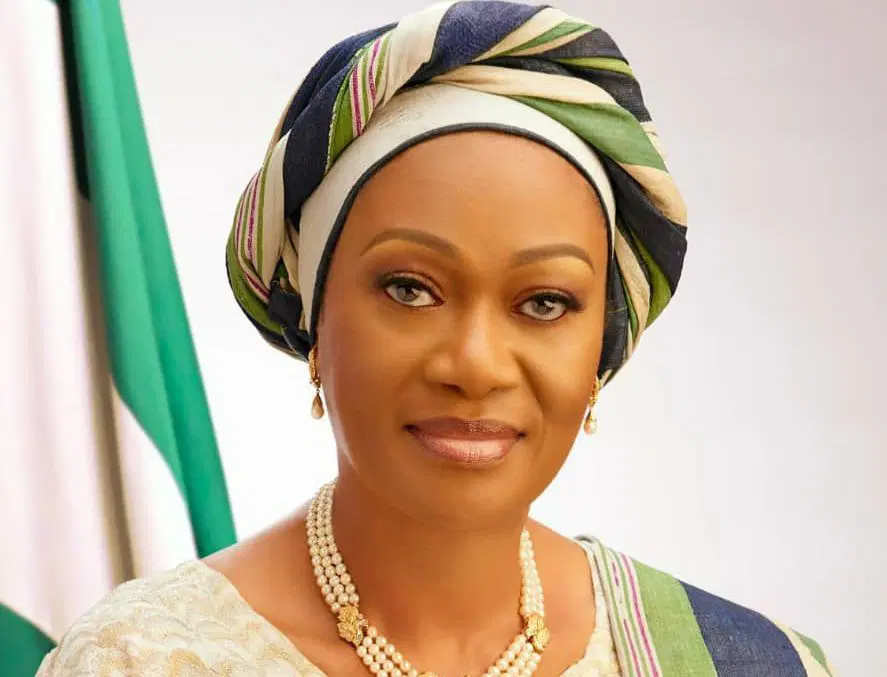
First Lady Oluremi Tinubu has said Nigeria’s economy is showing signs of stabilisation, while pointing to a decline in inflation as evidence of progress under the Federal Government’s economic reform programme.
She made the remarks amid continuing public debate over the impact of the administration’s policies on households and businesses.
The First Lady’s assessment comes as the government continues to defend its economic reforms, including measures aimed at strengthening macroeconomic stability, attracting investment and improving domestic production.
Government highlights economic progress
The administration has repeatedly argued that reforms introduced since May 2023 are designed to address structural weaknesses in the Nigerian economy and establish a stronger foundation for long-term growth.
However, the impact of those reforms remains contested, particularly because Nigerians continue to face elevated living costs and pressure on household purchasing power.
Recent government messaging has increasingly focused on moderating inflation, food production, investment and improved economic stability as indicators of progress.
Economic claims face public scrutiny
While inflation has shown signs of easing from earlier peaks, the pace of price increases remains a major concern for households.
A decline in the inflation rate means prices are rising more slowly; it does not necessarily mean that the overall price level has returned to what it was before the recent period of high inflation.
Against that backdrop, the First Lady’s comments form part of the government’s broader defence of its economic programme as Nigeria approaches the 2027 general election.
The administration’s economic performance is likely to remain a central issue in the political debate over the coming months.