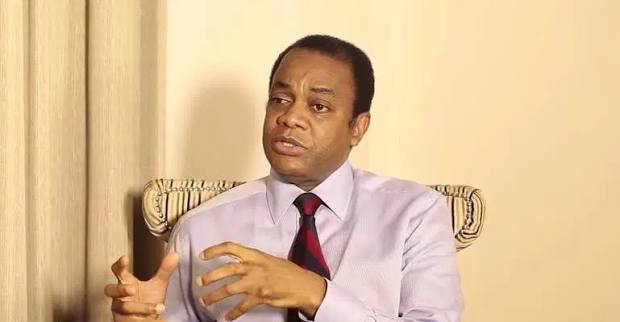
Former Cross River State Governor and Peoples Redemption Party presidential candidate Donald Duke has promised to target a petrol price of about N300 per litre if elected president in 2027.
Duke made the pledge during an appearance on Channels Television’s Morning Brief, where he outlined his alternative approach to Nigeria’s petroleum pricing and broader economic policy.
The former governor argued that petrol produced for domestic consumption should be priced according to production costs rather than international market prices.
He said Nigeria could allocate a portion of its crude oil production for domestic consumption while selling the remainder internationally.
Duke said the approach would enable the government to reduce the pressure of fuel costs on households and businesses without returning to what he described as an unsustainable subsidy regime.
Asked what he considered a realistic petrol price under his administration, Duke said he would try to bring the price down to approximately N300 per litre.
He argued that fuel affordability was essential to productivity because transportation costs and energy prices affect virtually every segment of the Nigerian economy.
The proposal represents a sharp contrast with the current market-driven pricing framework that followed the removal of the petrol subsidy under President Bola Tinubu.
Duke criticised the practice of pricing domestic petroleum products entirely according to international market conditions, arguing that Nigeria should leverage its status as an oil-producing country to provide affordable energy to its population.
He also said the 2027 election should not be reduced to simply removing the APC from power, arguing that opposition parties should agree on a clear vision for Nigeria.
The PRP candidate’s proposal is likely to become part of the wider economic debate ahead of the 2027 presidential election, particularly as fuel prices remain one of the most politically sensitive issues in Nigeria.
Whether a N300-per-litre price can be achieved sustainably without reintroducing large government subsidies would ultimately depend on crude production, refining capacity, domestic consumption, fiscal policy and the structure of the proposed pricing mechanism.
Duke’s pledge is therefore a campaign proposal rather than a current government policy.