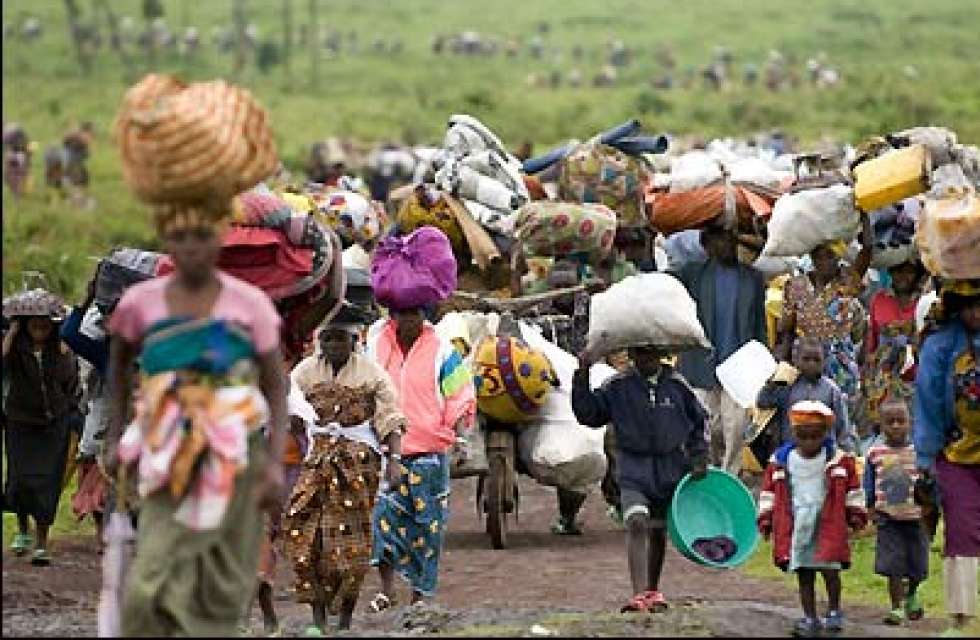
The Federal Government has disclosed that 3,679,757 Nigerians are currently internally displaced, with affected persons living either in formal camps or within host communities across the country.
The figure, which covers the situation as of September 1, 2026, was disclosed by the Federal Commissioner and Chief Executive Officer of the National Commission for Refugees, Migrants and Internally Displaced Persons (NCRMIDP), Aliyu Ahmed.
Ahmed made the disclosure in Abuja at a National Multi-Stakeholder Policy Dialogue organised by the Civil Society Legislative Advocacy Centre (CISLAC) and Transparency International Nigeria, with support from the Government of Ireland.
The scale of the displacement highlights the continuing humanitarian consequences of insecurity, communal violence and other crises that have forced millions of Nigerians away from their homes and livelihoods.
The disclosure was made at a forum focused on strengthening human-rights-centred and gender-responsive approaches to sexual and gender-based violence in defence and security operations.
The government’s latest figure places the number of internally displaced Nigerians at well over 3.6 million, underscoring the scale of the humanitarian challenge facing authorities, humanitarian agencies and host communities.
The displacement crisis is particularly significant in areas affected by prolonged armed conflict and insecurity, where families have repeatedly been forced to abandon homes, farms, businesses and other sources of livelihood.
Beyond the immediate need for food, shelter and healthcare, prolonged displacement creates wider challenges around education, employment, family reunification, protection and the eventual return or resettlement of affected communities.
Recent data cited by the National Human Rights Commission also put the number of refugees and asylum seekers in Nigeria at 140,927, alongside the 3,679,757 internally displaced persons recorded as of September 1.
The figures reinforce concerns that Nigeria’s displacement crisis cannot be addressed solely through emergency relief, but requires sustained investment in security, reconstruction, livelihoods and the restoration of basic services in communities affected by conflict.
Stakeholders at the Abuja dialogue consequently called for approaches to security operations that protect civilians and uphold human rights, particularly women and other vulnerable groups who face heightened risks during conflict and displacement.
The government and humanitarian partners are expected to continue working with affected communities and state authorities to improve protection, assistance and long-term solutions for millions of Nigerians displaced from their homes.