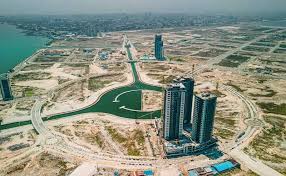
The price of land in Eko Atlantic, Lagos’ most exclusive coastal development, has surged past ₦2 billion per plot—marking a dramatic shift in the city’s luxury real estate landscape, according to the State of Lagos Housing Market Report (Volume 3).
The report, released by the Roland Igbinoba Real Foundation for Housing and Urban Development, outlines a decade-long property boom fueled by population growth, urbanisation, and high-net-worth investment. It shows that plots once valued at ₦180 million in the early 2000s now command prices more than ten times that amount.
This surge reflects broader trends across Lagos’ elite neighbourhoods. Land in Lekki Phase 1 that sold for ₦10–15 million in 2005 now goes for over ₦400–500 million. In Ibeju-Lekki, plots that were available for ₦500,000–₦1.5 million in 2013 have risen to between ₦25 million and ₦40 million as of Q1 2025—representing a 40x return in just ten years.
The report characterises Lagos’ property market as one increasingly driven by wealth preservation and capital gains, rather than basic housing demand. “Real estate has become a financial vehicle for Nigeria’s affluent class and diaspora investors,” the publication notes, emphasizing the transformation of land into an appreciating asset in an increasingly competitive market.
What’s Fueling the Real Estate Explosion?
Several factors are behind the soaring land values in Lagos. The city’s population now exceeds 24 million, with more than 6,000 new migrants arriving daily—half of whom choose to stay. This demographic pressure has accelerated demand for all types of housing, especially within secure, well-serviced environments.
Despite wider infrastructure gaps, luxury homes in Lagos are being developed to meet global standards. Smart home systems, private gyms, swimming pools, concierge services, and wellness centres have become standard in top-tier properties. Ultra-exclusive communities such as Banana Island also feature amenities like helipads, golf courses, and waterfront views.
Interior design quality has also kept pace. These homes typically offer imported Spanish tiles, state-of-the-art sanitary ware, security-reinforced doors, double-glazed windows, and premium electrical installations. Dedicated entertainment lounges, cinemas, game rooms, and private bars are increasingly common.
Architecturally, Lagos’ luxury segment features both sleek, modern builds with floor-to-ceiling windows and open layouts, as well as more traditional styles that incorporate Nigerian cultural elements like handcrafted woodwork and native stone materials.
Crucially, exclusivity and social prestige remain defining elements. Gated enclaves such as Ikoyi, Lekki Phase 1, Victoria Island, and Banana Island are seen not just as residential addresses, but as status symbols. Proximity to top-tier business districts, upscale shopping centres, fine dining, and coastal recreation only adds to their allure for both local elites and global investors.
The Bigger Picture
The State of Lagos Housing Market Report emphasizes that the property market’s rapid growth is unlikely to slow down soon. With the city projected to surpass 25 million residents by 2025, Lagos continues to evolve as one of Africa’s most dynamic—and expensive—real estate destinations.