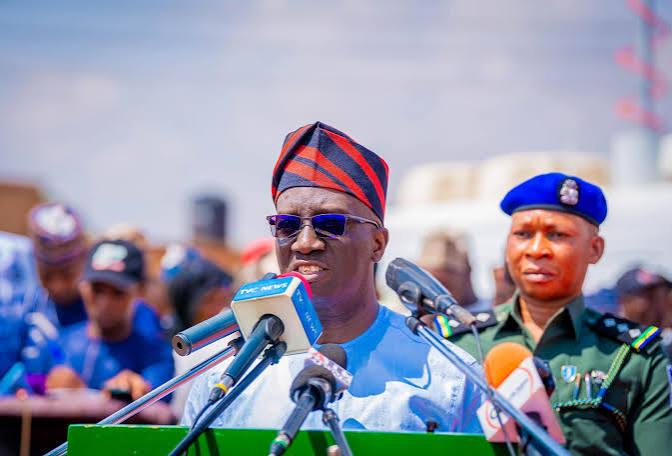
Edo State Governor Monday Okpebholo has expressed confidence in President Bola Ahmed Tinubu’s economic reform programme, predicting that Nigeria could attain living standards comparable to those in the United States and the United Kingdom if the administration’s policies succeed.
Okpebholo’s remarks reflect his support for the President’s economic agenda as debate continues over the long-term benefits and immediate costs of the reforms introduced since Tinubu assumed office in May 2023.
The administration has implemented significant changes to Nigeria’s economic management, including the removal of petrol subsidy and the unification of the foreign exchange market. The government has defended these measures as necessary to address structural weaknesses, improve public finances and establish a more sustainable economic framework.
However, the changes have also contributed to intense public debate over petrol prices, transport costs, food affordability and the purchasing power of households.
Supporters of the administration argue that the reforms are intended to correct longstanding distortions and create conditions for stronger investment and economic growth. Critics, meanwhile, contend that the benefits have not reached many Nigerians quickly enough and have called for more effective social protection measures.
Okpebholo’s comparison with the United States and the United Kingdom places attention on the scale of transformation required to improve Nigeria’s living standards.
Achieving comparable outcomes would involve much more than economic growth alone. It would require sustained improvements in productivity, wages, healthcare, education, electricity supply, transport infrastructure, public safety and access to essential services.
It would also depend on the effective management of public revenue, the creation of productive jobs and the ability of businesses to expand without facing prohibitive operating costs.
For millions of Nigerians, the immediate test of the reform programme remains whether household incomes can keep pace with living expenses and whether economic activity generates more secure employment opportunities.
The government’s supporters have argued that some reforms require time to produce their full effects. Yet the longer-term case for those policies will depend on measurable outcomes rather than assurances alone.
Okpebholo’s prediction therefore adds to the debate about what Nigerians should expect from the administration’s economic direction.
Whether the country can achieve living standards comparable to those of advanced economies will ultimately depend on the quality of implementation, the consistency of public policy and the extent to which economic gains translate into improved conditions for ordinary citizens.
The governor’s statement is an expression of confidence in the reform agenda; the scale of the promised transformation remains a long-term challenge that will be judged by results.