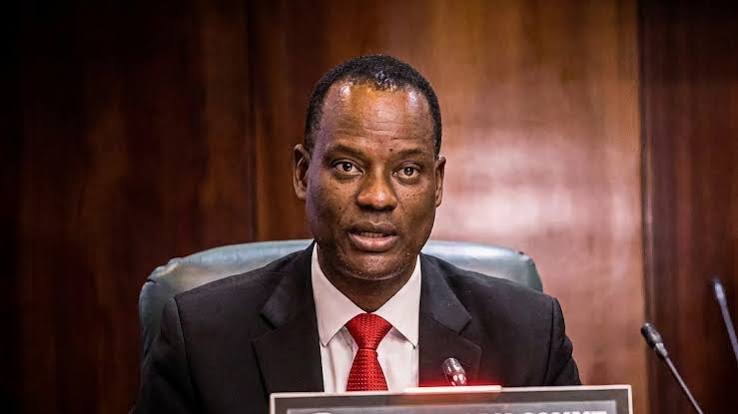
Minister of Finance and Coordinating Minister of the Economy Taiwo Oyedele has warned that any indication the Federal Government may restore petrol subsidies could undermine investor confidence, trigger capital flight and place further pressure on the naira.
Oyedele gave the warning during a briefing at the conclusion of the 2026 International Monetary Fund and World Bank Group Annual Meetings in Bangkok, Thailand.
He argued that investors are closely monitoring Nigeria’s commitment to its economic reforms, particularly the removal of petrol subsidies and changes to the foreign exchange system.
According to the minister, even the suggestion that the government might reverse its existing policies could unsettle financial markets and increase the cost of borrowing.
Concern Over Exchange Rate Pressures
Oyedele warned that a return to petrol subsidies could affect foreign investment flows and intensify pressure on the country’s foreign exchange market.
The more extreme exchange-rate figures circulating in connection with his warning — including projections of ₦3,000, ₦3,500 or ₦4,000 to the dollar — should be understood as conditional scenarios, not established forecasts of where the naira will trade.
The minister’s central argument was that policy uncertainty could prompt investors to reconsider their exposure to Nigeria, potentially worsening pressure on the currency.
Capital flight, in this context, refers to the movement of investment funds out of a country in response to perceived risks, uncertainty or deteriorating economic conditions.
Government Defends Economic Reforms
Oyedele maintained that the Federal Government was not planning to reverse its economic reform programme.
He said investors had repeatedly sought assurances that the administration would maintain its policies as the country approached another election cycle.
According to him, financial markets were assessing whether Nigeria would sustain its current reform direction, making consistency in economic policy an important consideration for investment decisions.
The government has defended the removal of petrol subsidies as part of its broader effort to reduce fiscal pressures and redirect public resources. However, the reforms have also contributed to significant cost-of-living concerns among households and businesses.
Balancing Investor Confidence and Household Welfare
The warning highlights the challenge facing policymakers as they seek to maintain investor confidence while addressing the financial pressures experienced by Nigerians.
A sustained recovery will depend not only on macroeconomic stability but also on whether growth translates into improved purchasing power, stronger job creation and more affordable living conditions.
As political debate intensifies ahead of the 2027 general election, the future of economic reforms is likely to remain a major issue for the government, opposition parties and investors.