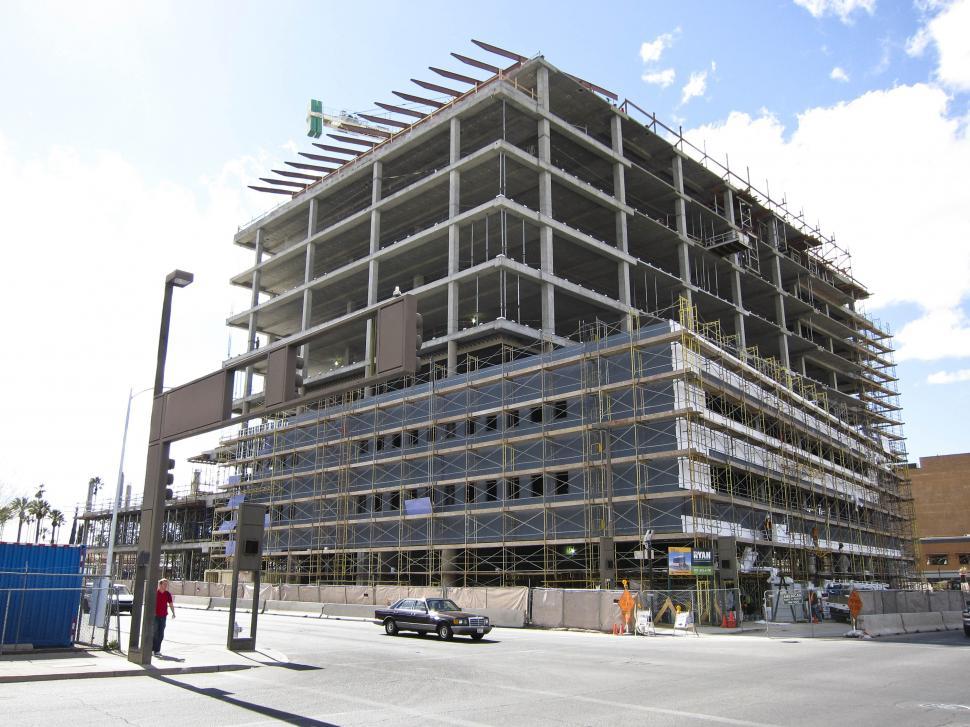
Real estate has officially surpassed crude oil to become Nigeria’s third-largest economic sector, following the release of rebased Gross Domestic Product (GDP) figures by the National Bureau of Statistics (NBS). The new data, covering 2019 to 2024, places Nigeria’s economic output at ₦372.8 trillion in 2024, equivalent to approximately $145.3 billion at the current exchange rate. This adjustment marks a significant revision from previous estimates and reflects structural changes in the economy.
The rebasing exercise, conducted to better capture the country’s evolving economic landscape, revealed moderate but consistent growth over the past five years. GDP rose from ₦205.09 trillion in 2019 to ₦372.82 trillion in 2024, with nominal growth of 17.81 percent recorded last year. Real GDP growth stood at 3.04 percent in 2023 and slightly increased to 3.38 percent in 2024. However, in the first quarter of 2025, growth slowed to 3.13 percent—the weakest pace since early 2024. The previous three quarters had stronger performances, with real GDP growing by 3.76 percent, 3.86 percent, and 3.48 percent, respectively.
Despite the larger GDP figures, Nigeria remains the fourth-largest economy in Africa, trailing behind South Africa, Egypt, and Algeria, whose economies are valued at $410.34 billion, $347.34 billion, and $268.89 billion, respectively, according to the International Monetary Fund. More importantly, the economic expansion has yet to translate into tangible improvements in the living conditions of ordinary Nigerians. Inflation remains a persistent issue, with headline inflation reaching 22.22 percent and food inflation climbing to 21.97 percent as of June 2025.
Speaking on the implications of the rebased figures, Muda Yusuf, Chief Executive Officer of the Centre for the Promotion of Private Enterprise, noted that the update provides a more accurate picture of the economy’s true size and composition. He pointed out that real estate has now overtaken crude oil in terms of contribution to GDP, marking a significant shift in the country’s economic structure. Yusuf explained that while expectations were initially high, the final figures were not as dramatic as anticipated. Nevertheless, the data reveals clear structural changes, with telecoms, agriculture, and industry all showing notable growth.
According to the revised breakdown, the agriculture sector now contributes 26 percent to GDP, up from 22.12 percent before the rebasing. The industry sector grew from 21.08 percent to 27.7 percent, while the services sector increased from 50.22 percent to 53.09 percent. The informal sector also saw a rise, contributing 42.5 percent compared to 41 percent previously. Yusuf emphasized that the services sector is growing faster than the real sector, which has important implications for future policy and planning.
However, not all reactions to the rebased GDP have been positive. Gbolade Idakolo, CEO of SD & D Capital Management, cautioned that the larger GDP figure does not automatically translate into improved living standards for Nigerians. He argued that while the new data may improve Nigeria’s macroeconomic ratios and global perception, it could also prompt the government to raise taxes in a bid to increase revenue relative to GDP. This move, he warned, could place additional financial strain on citizens already burdened by high inflation, joblessness, and declining income levels.
Professor Godwin Oyedokun of Lead City University added that while GDP rebasing is a standard statistical exercise aimed at incorporating emerging sectors such as digital technology, e-commerce, and the creative industries, its benefits must be intentionally harnessed through inclusive economic policies. He stressed that without deliberate efforts to address unemployment, insecurity, and poor infrastructure, the revised GDP would remain a statistical upgrade rather than a catalyst for real progress. Oyedokun called on the government to use the updated data to enhance fiscal planning, expand social welfare programs, and invest in human capital development.
The 2024 rebasing marks only the second time Nigeria has updated its GDP structure in over a decade, following a similar revision in 2014. Although the latest data offers a more comprehensive snapshot of the economy, experts agree that real transformation will depend on how the government leverages these insights to tackle deep-rooted structural challenges and drive equitable growth across all segments of society.
While real estate’s rise signals a diversification away from oil dependency, and sectors like telecoms and agriculture continue to gain prominence, the overarching issue remains clear: unless these gains are matched by meaningful reforms and inclusive development strategies, the rebased economy may reflect growth on paper—but not in the lives of the Nigerian people.