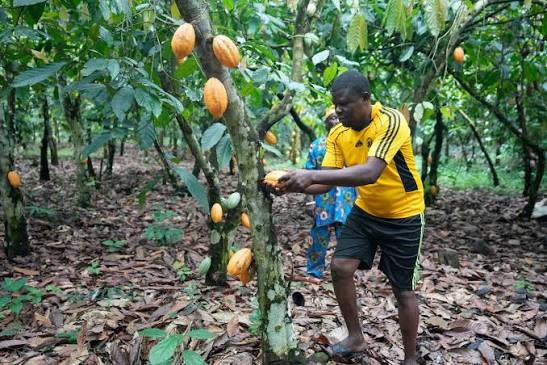
The Federal Government is seeking to attract European investors to Nigeria’s agricultural sector through its one-million-hectare tree crops expansion programme, with a presentation scheduled for Brussels, Belgium.
The initiative is expected to be showcased to European cocoa industry leaders and prospective investors at the Nigeria/West Africa Cocoa Origins–EU Industry Match-Making Forum, organised alongside the Nigeria–Belgium-Luxembourg Business Forum.
The programme is intended to expand Nigeria’s tree crop production, strengthen agricultural value chains and improve the country’s competitiveness in international markets, particularly the cocoa industry.
The presentation is being coordinated by the Agribusiness and Productivity Enhancement Project Management Office in the Office of the Vice-President, in collaboration with the EU–Nigeria Agribusiness Platform.
The forum is organised by the EU–Nigeria Agribusiness Platform under a European Union Global Gateway grant, with support from the European Cocoa Association.
The European Cocoa Association represents major players in the continent’s cocoa processing industry, making the engagement an opportunity for Nigeria to present its agricultural investment prospects to companies with significant influence across the international cocoa value chain.
The Federal Government’s strategy comes as Nigeria seeks to expand agricultural production, attract foreign capital and create more opportunities for farmers, processors and other participants in the sector.
The proposed expansion could also help strengthen the supply of cocoa and other tree crops, provided the programme is supported by adequate infrastructure, access to finance, reliable seedlings, improved farming practices and effective coordination among stakeholders.
However, attracting investors will require more than presenting the programme abroad. Potential investors will need confidence in land access, traceability systems, infrastructure, long-term policy stability and the ability to increase production sustainably.
Environmental considerations are also expected to remain important, particularly as European buyers face stricter requirements relating to deforestation and the traceability of agricultural commodities.
The Brussels engagement therefore provides an opportunity for Nigeria to demonstrate how agricultural expansion can be combined with responsible land use and transparent supply chains.
If successfully implemented, the programme could contribute to rural employment, export earnings and greater participation by Nigerian farmers in the international cocoa market. Western Post