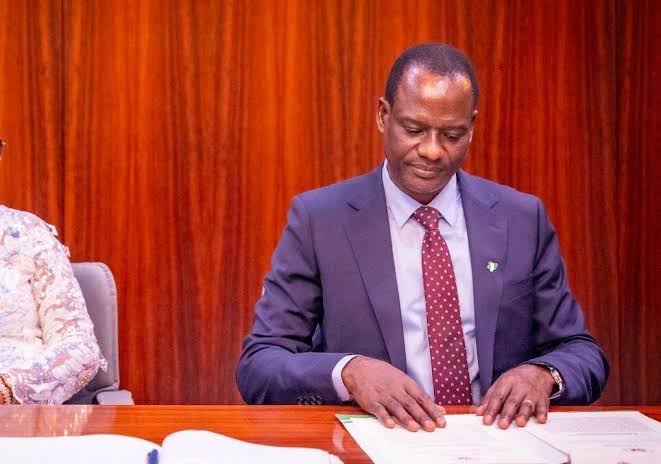
The Minister of Finance and Coordinating Minister of the Economy, Taiwo Oyedele, has defended President Bola Ahmed Tinubu’s request for legislative approval of an external borrowing plan comprising $20.52 billion and €1.045 billion, saying the proposed financing is intended to support critical investments across Nigeria’s economy.
Oyedele explained that the proposed facilities would finance projects and programmes covering transportation, defence and security, healthcare, agriculture, energy, education, digital infrastructure and other priority areas.
The minister spoke in Abuja after a Federal Executive Council meeting presided over by President Tinubu, amid growing public debate over the scale of the proposed borrowing and the government’s plans for managing the country’s debt.
Tinubu had requested approval from the National Assembly for the 2026–2027 Supplementary External Borrowing Rolling Plan, with the request presented to lawmakers as part of efforts to finance infrastructure and other development programmes.
The proposal comprises $20.52 billion and €1.045 billion in external financing. The government has maintained that the plan is intended to fund productive projects rather than simply increase the country’s debt burden.
Oyedele argued that the economic value expected from the proposed investments should be considered when assessing the financing plan, particularly where projects are designed to improve infrastructure, generate employment and strengthen productivity.
He also indicated that the programme covered investments involving federal institutions, state governments and other public-sector entities.
Transportation infrastructure is among the major areas identified for funding, with projects expected to support road and rail development and improve connectivity across the country.
Other proposed areas of investment include healthcare facilities, agricultural development, energy infrastructure, digital services, education and social protection.
The minister’s defence comes amid criticism from opposition figures and other commentators who have questioned the scale of the proposed borrowing and called for greater transparency regarding the specific projects to be funded.
Critics have argued that Nigerians should be given sufficient information about project locations, costs, contractors, expected outcomes and repayment obligations before lawmakers approve additional external financing.
The concerns reflect broader questions about Nigeria’s debt sustainability, public spending and the extent to which large-scale borrowing can translate into tangible improvements in living standards.
Oyedele, however, maintained that the proposed financing should be assessed in terms of its intended economic benefits and the assets expected to be created.
The borrowing plan remains subject to legislative consideration. Its eventual implementation will depend on the relevant approvals and the terms attached to the proposed financing arrangements. TheCable+2