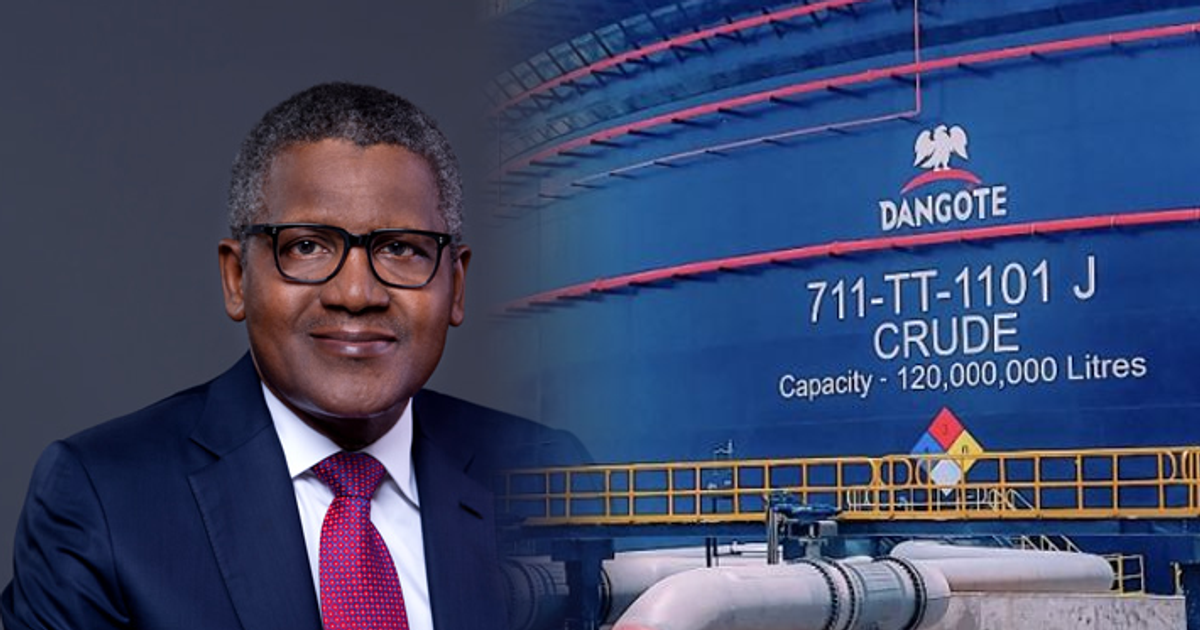
The Dangote Petroleum Refinery has achieved a major export milestone, having shipped over 1.3 billion litres of Premium Motor Spirit (PMS) in less than two months. This development signals a turning point for Nigeria’s refining sector, yet the country continues to rely heavily on imported fuel to meet local demand.
This was disclosed by the President of Dangote Group, Alhaji Aliko Dangote, during the West African Refined Fuel Markets Conference, jointly hosted by the Nigerian Midstream and Downstream Petroleum Regulatory Authority (NMDPRA) and S&P Global Commodity Insights. Dangote revealed that between early June and mid-July 2025, the refinery exported approximately one million metric tonnes of petrol—equivalent to about 1.35 billion litres—making Nigeria, for the first time in recent history, a net exporter of refined fuel.
Despite the surge in exports from the privately owned refinery, Nigeria and other West African nations still import the majority of their petrol needs. Farouk Ahmed, the Chief Executive Officer of the NMDPRA, confirmed that around 69 percent of all PMS traded in the region continues to be sourced from international markets. He noted that current statistics for 2025 show an average monthly gasoline trade volume of 2.05 million metric tonnes across the region, with nearly 70 percent imported.
Recent data underscores the depth of Nigeria’s dependence on foreign fuel. In the last eight days alone, over 231.88 million litres of petrol were imported into the country. This was based on findings from the Nigerian Ports Authority’s Shipping Position Daily, which reported that 172,917 metric tonnes of PMS arrived through ports such as Apapa, Tin Can, and Calabar. With each metric tonne converting to roughly 1,341 litres, the total petrol import volume during that period was over 231 million litres.
While the Dangote Refinery’s export figures have been praised in some quarters, the company has also faced criticism and allegations of attempting to monopolize the downstream market. Aliko Dangote has dismissed such claims, stating that too many influential individuals in the country choose to invest abroad while offering only criticism at home, rather than supporting national growth through meaningful industrial investment.
President Bola Ahmed Tinubu has also commented on Africa’s position in the global energy landscape, emphasizing the need for the continent to shift from being a passive price taker to an active market shaper. In a statement shared on his official X account, the president called for the development of independent, transparent benchmarks that reflect Africa’s production capacity and economic realities. He further noted that Nigeria is currently collaborating with neighboring countries to build a unified regional market that rewards local production, ensures energy access for citizens, and promotes cross-border economic prosperity.
As part of these efforts, the NMDPRA is working with S&P Global Commodity Insights to develop a dedicated regional pricing benchmark for West Africa. This initiative includes the creation of price indices for key refined products such as Premium Motor Spirit, Automotive Gasoil, Aviation Turbine Kerosene, and Liquefied Petroleum Gas. According to Farouk Ahmed, this benchmark will improve investor confidence, encourage infrastructure investment, and enable real-time pricing transparency throughout the fuel supply chain.
He stated that the ultimate objective is to establish a competitive and data-driven fuel market that accurately reflects operational costs and supports sustainable growth across the West African region.