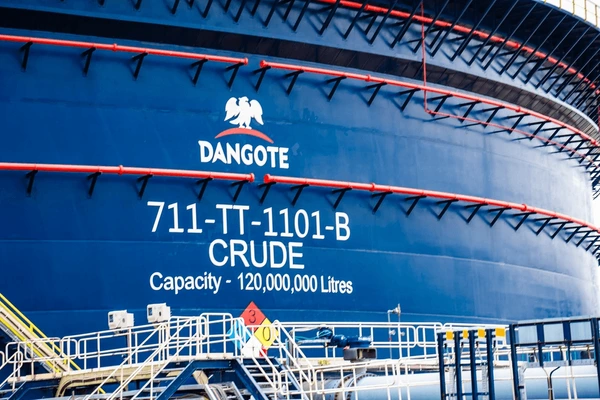
Nigeria’s downstream petroleum sector is undergoing a dramatic shake-up as the Dangote Petroleum Refinery introduces a free fuel delivery scheme that is already changing supply dynamics across the country. The initiative, announced by the Dangote Group on Monday through its social media channels, is designed to reduce logistics costs, cut pump prices, and provide direct distribution of petrol from its massive 650,000-barrels-per-day facility in Lekki.
Several of the country’s biggest petroleum marketers, including Conoil PLC, Eterna PLC, Golden Super, Nepal Energies, Kifayat Global Energy, and Riquest and Gas, have signed on to the programme. By joining, these companies will now receive seamless delivery of refined petrol without incurring the usual transportation costs that often inflate prices for end users. In its announcement, Dangote called on other station owners and bulk buyers to register quickly, promising that the benefits of free delivery would translate into more affordable pump prices nationwide.
The scheme will begin in Lagos, Abuja, Ogun, Oyo, Ondo, Osun, Ekiti, Kwara, Delta, Rivers, and Edo before extending to more states. To power the ambitious logistics plan, the refinery has deployed more than 1,000 compressed natural gas-powered trucks, underscoring its commitment to efficiency and sustainability. For many filling stations and bulk buyers, this has become a cost-saving alternative, with many opting to bypass traditional supply chains in favour of direct access to Dangote.
However, the development has not been well received by all stakeholders. The National Association of Road Transport Owners has strongly criticized the free delivery model, warning that it threatens the livelihood of tanker drivers who have long served as the backbone of fuel distribution in Nigeria. The association’s president, Yusuf Othman, said his members, who collectively operate more than 30,000 trucks, are being sidelined as companies jettison existing contracts to take advantage of Dangote’s offer. He explained that many transporters had entered into both formal and informal agreements with filling stations and bulk buyers, some of which were used to secure bank loans for truck purchases. Now, those contracts are being undermined, leaving tanker owners in a precarious position.
Othman stressed that the situation is already creating tension among members who fear being pushed out of business. He argued that while Dangote’s approach might be attractive to marketers and consumers, it disregards existing contractual obligations and destabilizes the industry. According to him, offering a service for free when competitors depend on revenue from the same service amounts to unfair competition. He urged the Federal Government and the Nigerian Midstream and Downstream Petroleum Regulatory Authority to intervene, insisting that the practice contravenes Section 212 of the Petroleum Industry Act.
Before the arrival of Dangote’s scheme, filling stations and bulk consumers typically depended on intermediaries, including depot owners and independent suppliers, who handled the logistics of fuel distribution. That model is now collapsing as buyers increasingly prefer to register directly with Dangote to reduce expenses. Industry analysts believe the move could permanently reshape fuel supply in Nigeria by eliminating middlemen, lowering costs, and putting pressure on traditional operators.
While many Nigerians are hopeful that the programme will deliver lasting relief at the pumps, the growing backlash from tanker owners and transport unions raises questions about how long the new order can last without government intervention. For now, Dangote’s bold strategy is already redefining fuel delivery in the country, setting the stage for what could become one of the most disruptive shifts in Nigeria’s downstream oil sector.