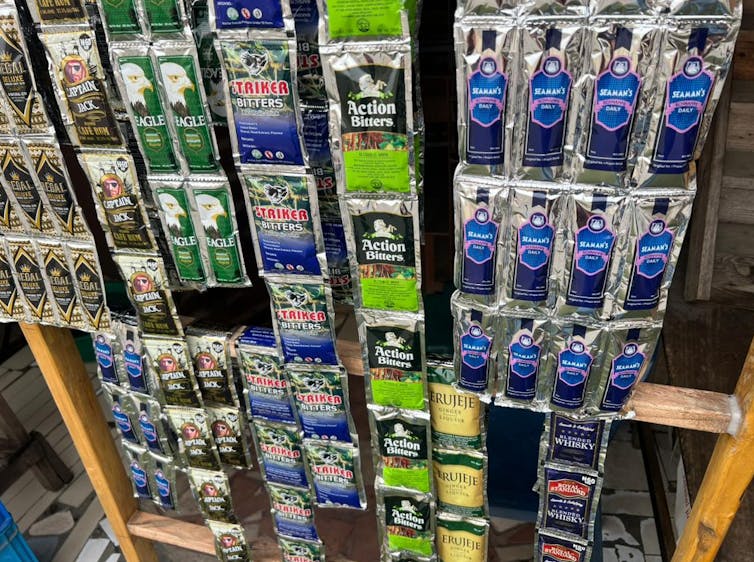
Nigeria’s plan to phase out alcoholic drinks sold in sachets and small bottles has reignited debate across the country, drawing both support and opposition from various stakeholders. The measure, first proposed in 2018, aims to curb alcohol-related harm among youths and vulnerable populations, but critics argue it threatens livelihoods and restricts access to affordable drinks.
The ban was initially part of a five-year agreement between the Federal Ministry of Health, NAFDAC, FCCPC, and industry bodies including the Association of Food, Beverages and Tobacco Employers (AFBTE). The MoU was designed to gradually phase out sachet and small-bottle alcoholic beverages, giving producers time to adapt. Implementation has been repeatedly delayed over the years, largely due to lobbying by manufacturers and public pushback.
Last week, the Nigerian Senate reinforced the deadline, ordering NAFDAC not to extend the December 31, 2025, timeline. Senator Asuquo Ekpenyong, who sponsored the motion, cited global best practices and public health concerns as the basis for strict enforcement. He warned that continued production of high-strength alcohol in sachets contributes to addiction, domestic violence, road accidents, school dropouts, and cognitive impairment, particularly among young people and commercial drivers. He also highlighted the unfair advantage enjoyed by manufacturers who continue to sell non-compliant products, putting compliant businesses at a disadvantage.
Other lawmakers voiced their support. Senator Anthony Ani described cheap, readily available alcohol as a growing social menace, while Senate President Godswill Akpabio called for decisive action, emphasizing the urgency of protecting youth welfare and public health. Following the resolution, NAFDAC Director-General Prof. Mojisola Adeyeye confirmed that the agency would begin enforcement in December, stressing that the regulation affects only spirit drinks in sachets or bottles under 200ml. Adeyeye emphasized that the ban is preventive, not punitive, aiming to reduce alcohol-related harm among minors and young adults.
However, the policy has drawn criticism from producers, distributors, retailers, and consumers. Some argue the ban will hurt small businesses and restrict access to affordable beverages for low-income Nigerians. Bukola Jaiyeloba, a businesswoman in the sector, warned that removing sachet and small-bottle alcohol could push marginalized groups toward more harmful substances while also threatening the livelihoods of those dependent on sales of these products.
Consumers have voiced similar concerns. Patrons at popular drinking spots in Lagos questioned why small-volume alcohol is targeted while illegal drugs remain widely available. Many stressed that sachet drinks are among the few affordable sources of leisure for young Nigerians and said they would find alternative ways to maintain their social habits despite the ban.
The debate highlights the tension between public health priorities and economic realities. While government agencies and lawmakers focus on protecting the youth and reducing alcohol-related harm, industry players and consumers remain apprehensive about the financial and social impacts of phasing out these widely consumed products.