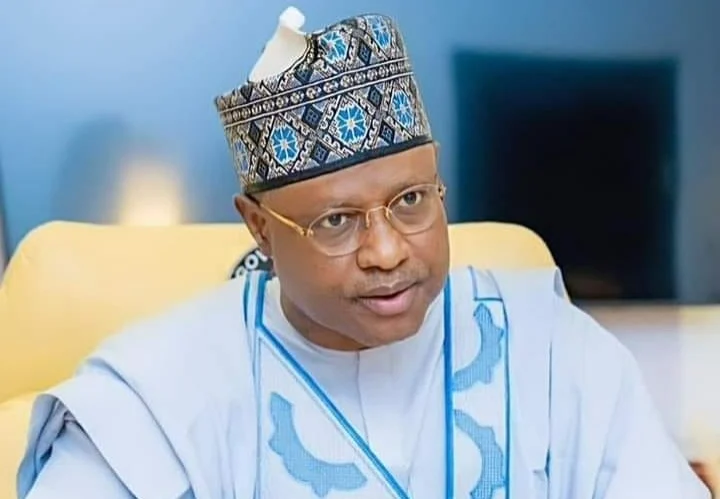
Governor Uba Sani has praised House of Representatives Speaker Dr. Tajudeen Abbas for his exemplary leadership and his efforts to promote development and empowerment across Kaduna State.
Speaking at the Renewed Hope Empowerment Programme in Zaria on Sunday, an initiative sponsored by the Speaker, Governor Sani described Abbas as one of the most effective Speakers in Nigeria’s history, highlighting his ability to manage the challenges of leading a 360-member legislative chamber. Sani noted that his commendation reflects not only his view but also that of President Bola Tinubu, who has publicly acknowledged Abbas’s contribution to fostering unity within the House.
“As a former senator, I understand the pressure and complexity of presiding over the House of Representatives. Despite the challenges, Speaker Abbas has distinguished himself by promoting development and supporting empowerment initiatives across the state,” Sani said.
The governor praised Abbas’s focus on youth and women empowerment, noting that the Speaker’s projects extend beyond his Zaria constituency to benefit Kaduna State and Nigeria at large. Sani defended his support for Abbas’s election as Speaker, emphasizing that it was motivated by a commitment to development rather than politics.
“I stand by leaders who bring tangible progress to their people. Speaker Abbas’s empowerment programs and infrastructural projects demonstrate his dedication to service,” he stated. He further challenged legislators to prioritize development in their constituencies, warning that failure to deliver schools, hospitals, or other essential projects would affect their political support.
Governor Sani added that Abbas has assisted all Kaduna State lawmakers in facilitating projects in their constituencies and personally oversees development initiatives across all 23 local government areas, with requests for additional facilities such as a stadium in Sabon Gari.
At the event, beneficiaries received a variety of resources: traditional leaders were given SUVs; farmers received tractors, combine harvesters, fertiliser applicators, knapsack sprayers, and solar- and petrol-powered water pumps; while women were provided with industrial sewing machines, grinding machines, deep freezers, and haulage tricycles to support small-scale businesses and tailoring enterprises.