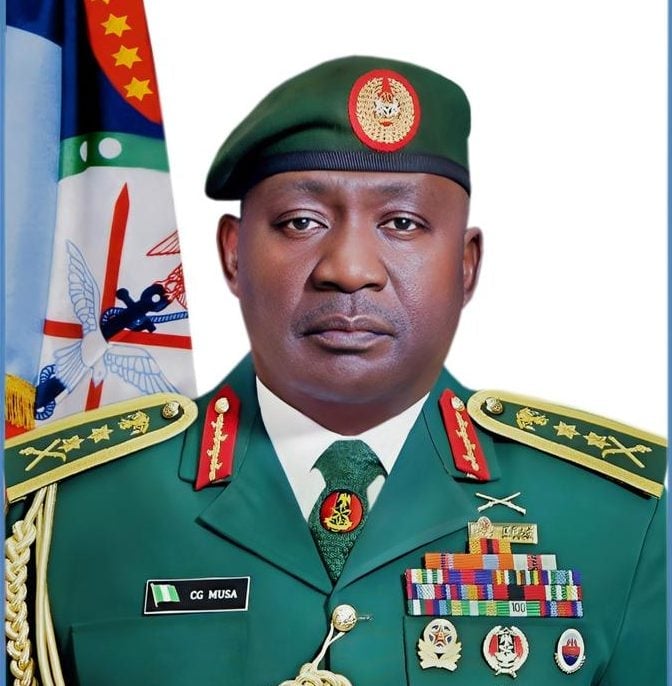
Nigeria’s Minister of Defence, General Christopher Musa, has firmly opposed any form of negotiation or ransom payment to terrorists, warning that such practices only reinforce criminal organisations and deepen the country’s security challenges. The minister made the remarks during his screening at the Senate, stressing that ransom payments enable armed groups to rebuild, acquire weapons and carry out fresh attacks.
Musa cited previous instances where communities that opted to negotiate with terrorists still faced further assaults afterwards. He added that Nigeria’s financial system is capable of tracking illicit transactions if fully utilised, arguing that strengthened monitoring tools would significantly disrupt the flow of funds to criminal networks.
The defence minister noted that military operations alone cannot resolve Nigeria’s complex security problems, stating that kinetic efforts contribute only a fraction of the overall solution. He pointed to poverty, poor governance, illiteracy and dysfunctional local council structures as underlying drivers of insecurity. Musa urged state and local government authorities to take ownership of early detection and intelligence gathering, emphasising that security agencies cannot shoulder the responsibility alone.
Expressing concerns about Nigeria’s slow judicial process, he warned that prolonged terrorism and kidnapping cases weaken national security efforts. Musa called for sweeping legal reforms, including the establishment of special terrorism courts, stricter sentencing and accelerated trials.
He also raised alarm over the resurgence of criminal activity along maritime routes between Akwa Ibom and Cameroon, with increasing incidents of piracy, sea robbery and coastal kidnappings. According to him, Operation Delta Safe is being expanded into previously calm zones now showing signs of infiltration.
Musa further demanded an outright ban on illegal mining, describing it as a major revenue stream for armed groups operating in forested regions. He revealed plans to reduce routine military checkpoints nationwide so that more troops can be deployed into forests and ungoverned areas. Restoring safe access to farmlands, he added, is central to stabilising food production and preventing hunger-driven unrest.
The minister disclosed that more than 70,000 Nigerians apply to join the military annually, though many resist deployment to conflict-prone areas. He said a unified national identity database would help eliminate recruitment fraud, improve criminal tracking and close loopholes currently exploited by terrorists and cybercriminals. Musa criticised Nigeria’s fragmented data systems—spread across immigration, quarantine and other agencies—as a major hindrance to effective intelligence work.
Following a special three-day debate, the House of Representatives adopted wide-ranging national security reform proposals. Lawmakers demanded transparent prosecution of terrorism-related cases, stating that openness and swift justice would help curb violent crime and rebuild public confidence.