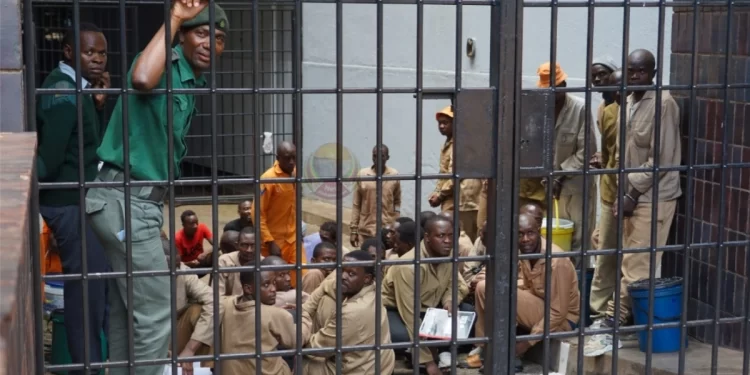
Zimbabwe has begun piloting a new correctional policy that allows carefully selected prisoners to leave custody temporarily to spend time at home with their partners, in a move authorities say is aimed at strengthening family bonds and improving rehabilitation outcomes.
The Zimbabwe Prisons and Correctional Service (ZPCS) confirmed that the initiative, which recognises conjugal rights as part of a broader reform agenda, is currently being tested at Marondera Female Open Prison and Connemara Prison. Only inmates with proven records of good behaviour and compliance with prison rules are being considered under the scheme.
ZPCS spokesperson, Assistant Commissioner Meya Khanyezi, said the policy reflects a shift from a purely punitive system to one focused on correction and reintegration. She explained that maintaining close family and emotional ties plays a significant role in preparing inmates for life after incarceration.
According to Khanyezi, the programme is an early feature of a wider parole framework being gradually rolled out by the authorities. She noted that under the arrangement, eligible inmates are permitted to spend private time with their partners at home rather than within prison facilities.
She added that the responsibility of reforming offenders should not rest solely on correctional institutions, stressing that families and communities have a shared role in the rehabilitation process, given that inmates eventually return to society.
Further details of the reforms were recently outlined by the Commissioner-General of Prisons, Moses Chihobvu, during an address to female inmates. He disclosed that the planned parole system could allow some prisoners to serve the remainder of their sentences at home under strict supervision, a proposal that reportedly generated excitement among inmates when announced in December 2025.
Under the proposed framework, a Parole Board will be tasked with assessing and selecting eligible inmates, with priority given to those who demonstrate sustained good conduct and meaningful progress in rehabilitation programmes, as authorities seek to balance public safety with humane correctional practices.