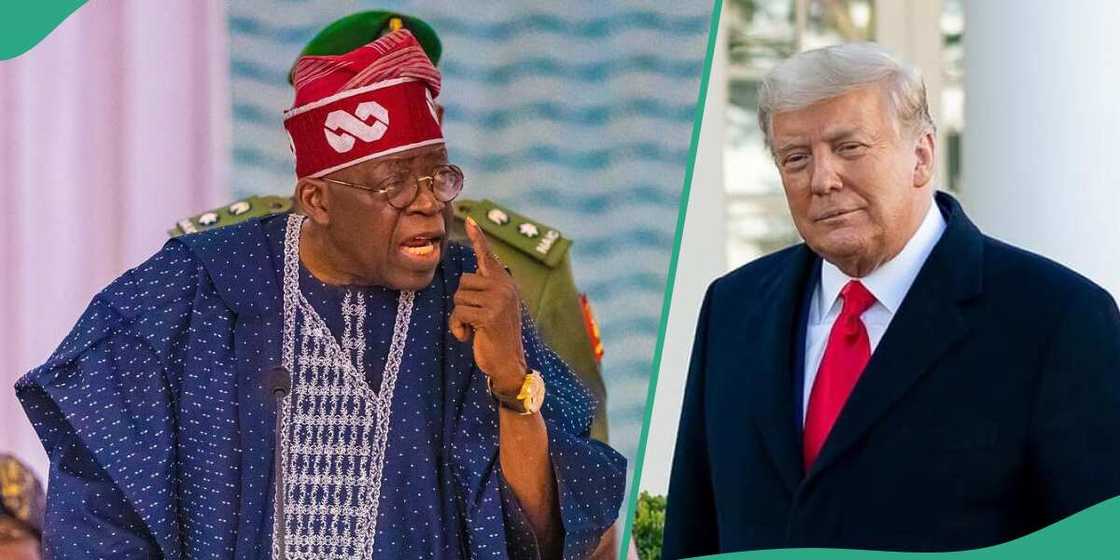
United States President Donald Trump has warned that Washington could carry out further military strikes in Nigeria if what he described as the continued killing of Christians in the country does not stop.
Trump made the remarks in an interview with The New York Times when asked whether the Christmas Day missile strikes against Islamic State militants marked the beginning of a broader US military campaign. The strikes followed earlier statements by Trump in which he threatened decisive action against groups he accused of targeting Christians in Nigeria.
“I’d love to make it a one-time strike,” Trump said. “But if they continue to kill Christians, it will be a many-time strike.”
The president’s comments came amid claims by some US politicians that Christians are facing systematic violence in parts of Nigeria. Trump had previously said he was prepared to deploy troops to confront militants responsible for the attacks, which he described as terrorism.
The Nigerian government, however, has pushed back against the narrative of targeted religious killings. Ademola Oshodi, Senior Special Assistant to President Bola Tinubu on Foreign Affairs and Protocol, described the Christmas Day strike as a one-off event and stressed that Nigeria remains in control of its internal security challenges.
Nigeria has consistently rejected allegations of genocide against Christians. In October, Trump’s senior adviser for Arab and African affairs, Massad Boulos, said extremist groups such as Boko Haram and the Islamic State were responsible for more Muslim deaths than Christian ones in the country.
Responding to those remarks, Trump acknowledged that Muslims were also victims of violence in Nigeria but insisted that Christians were disproportionately affected. “I think that Muslims are being killed also in Nigeria. But it’s mostly Christians,” he said.
Following the US strikes, flight-tracking data reportedly indicated a resumption of American intelligence and surveillance activities over parts of Nigeria, raising questions about the possibility of deeper US military involvement in the region.