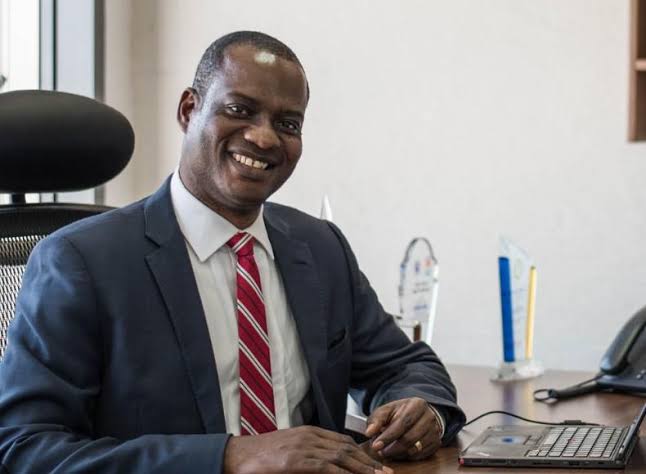
The Chairman of the Presidential Committee on Fiscal Policy and Tax Reforms, Mr. Taiwo Oyedele, has disclosed that his role in driving Nigeria’s far-reaching tax reforms has exposed him to threats to his personal safety.
Oyedele made the revelation on Tuesday in Abuja while speaking at a governance colloquium organised to mark the 50th birthday of Hajiya Hadiza Bala Usman, Special Adviser to the President on Policy and Coordination.
Addressing participants, Oyedele described tax reform as one of the most difficult aspects of governance, noting that efforts to overhaul entrenched systems often provoke resistance from powerful interests.
“Reforms are hard, and tax reforms are even harder. You need courage. I receive threats simply for trying to fix a broken system,” he said.
He identified deep-seated challenges confronting the reform agenda, including low public trust in government, weak tax compliance, and limited public understanding of how tax revenues translate into public services.
According to him, Nigeria’s tax-to-GDP ratio remains significantly lower than that of comparable economies, making comprehensive reforms unavoidable if the country is to fund development sustainably.
Oyedele urged Nigerians who support the reforms to engage actively in public discourse, warning that silence allows misinformation and opposition narratives to dominate. He disclosed that the Federal Government began implementing the new tax regime on January 1, 2026.
The reforms are anchored on four major legislations: the Nigeria Tax Act 2025, the Nigeria Tax Administration Act 2025, the Nigeria Revenue Service Establishment Act 2025, and the Joint Revenue Board Establishment Act 2025.
He stressed that trust remains one of the biggest obstacles to reform. “The trust in government and within government is very low,” he said, adding that Nigeria’s weak tax culture has left many citizens unaware of their obligations.
Oyedele also pointed to a communication gap surrounding the reforms, explaining that many Nigerians mistakenly believe the new laws introduce additional taxes rather than streamline and harmonise existing ones.
“Suddenly, there is national awareness, and people say government has come with taxes all over the place, when in fact what the government is doing is to reduce and harmonise the taxes they have been paying,” he said.
Despite facing threats, online attacks, and political pressure, Oyedele maintained that the reforms are necessary for long-term economic stability. He likened the process to a painful but essential medical procedure.
“What we have been doing all along with the tax system was pain relief. It hasn’t taken us far. Now we’re doing the surgery. It will come with some pain, but that’s the only right thing to do,” he said.
He expressed optimism about Nigeria’s future, describing the current reforms as the most significant progress he has witnessed in his lifetime and calling for sustained political will and public support to ensure lasting success.