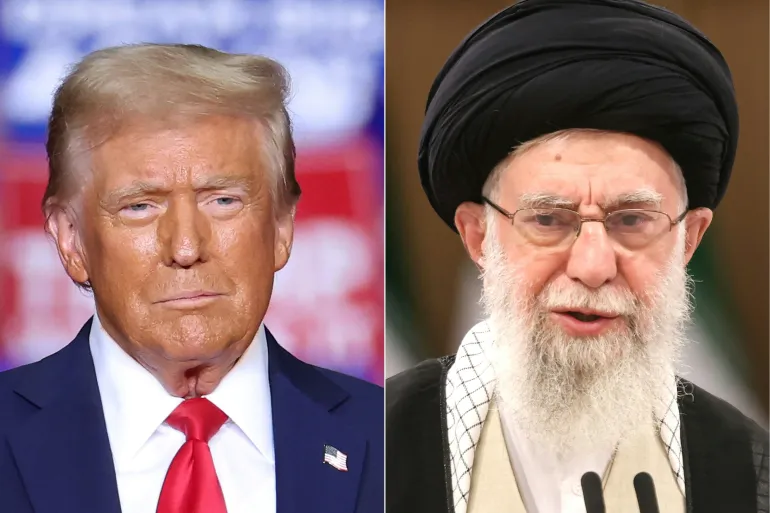
Iran has issued a stark warning to the United States following President Donald Trump’s decision to deploy a large US naval force toward the Middle East, escalating tensions already heightened by a deadly crackdown on protests inside Iran.
The warning was delivered by senior Iranian cleric Mohammad Javad Haj Ali Akbari, who said Tehran could target American-linked economic interests across the region if Washington launched a military strike. He claimed that US investments in the Middle East were within Iran’s missile range, signalling potential retaliation beyond Iran’s borders.
President Trump confirmed earlier this week that a significant US naval presence, described by him as a “massive armada,” was heading toward the region. The deployment reportedly includes the aircraft carrier USS Abraham Lincoln and several guided-missile destroyers. While stressing that the force might not be used, Trump said Washington was closely monitoring developments in Iran.
“We have an armada heading in that direction, and maybe we won’t have to use it,” Trump told reporters, adding that the US was “watching them very closely.”
The standoff comes amid mounting international concern over Iran’s handling of nationwide protests that erupted over economic hardship and later expanded into broader demands for political change. Trump has repeatedly warned Tehran of severe consequences if executions of protesters continued.
Regional tensions have also drawn in key US allies. The United Kingdom has deployed Royal Air Force Typhoon fighter jets to Qatar, a move the UK Ministry of Defence described as defensive and aimed at maintaining stability. The deployment was carried out at the request of the Qatari government and places British aircraft just across the Persian Gulf from Iran.
Iranian authorities, however, have rejected claims that executions of protesters have been suspended. Iran’s chief prosecutor, Mohammad Movahedi, dismissed reports suggesting that hundreds of death sentences had been halted, describing them as false. Foreign Minister Abbas Araqchi similarly insisted that there was “no plan for hanging at all.”
Despite official denials, international scrutiny continues to intensify. The United Nations Human Rights Council is scheduled to convene an emergency session to address what it has described as “alarming violence” against protesters in Iran.
Human rights organisations estimate that thousands may have been killed since the protests began, though the true scale remains unclear due to widespread internet restrictions imposed by Iranian authorities. Analysts say the prolonged communications blackout has made independent verification difficult and may be intended to obscure the extent of the crackdown.