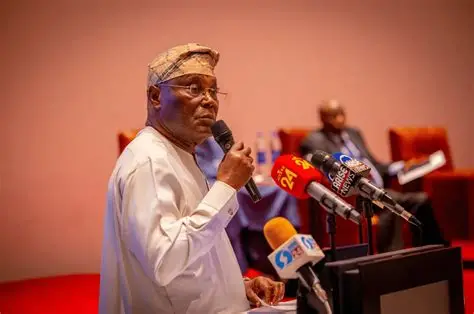
Former Vice President and African Democratic Congress (ADC) presidential candidate Atiku Abubakar has criticised the Federal Government over its decision to introduce a ₦50,000 uniform registration fee for WAEC and NECO examinations from 2027, alongside increases affecting Federal Unity Colleges. He described the measures as “cruel” and “economically insensitive,” warning they could worsen Nigeria’s out-of-school children crisis.
Fresh criticism has greeted the Federal Government’s new education cost policies, with former Vice President Atiku Abubakar accusing the Tinubu administration of placing additional financial pressure on struggling Nigerian families.
The opposition leader said the approval of a ₦50,000 examination fee for WAEC and NECO candidates, coupled with increased costs in Federal Unity Colleges, risks making education less accessible at a time when millions of households are battling economic hardship.
In a statement, Atiku described the policy as unfair and called on the Federal Government to immediately reverse the increases.
He argued that raising the cost of secondary education and external examinations would disproportionately affect low-income families and could force more children out of school.
According to the former vice president, education should be made more affordable rather than more expensive, particularly as Nigeria continues to record one of the world’s largest populations of out-of-school children.
The Federal Government recently approved a uniform ₦50,000 registration fee for WAEC and NECO examinations beginning with the 2027 examination cycle, saying the move would create a harmonised fee structure for both examination bodies.
The decision has sparked debate among education stakeholders, parents and political leaders over its likely impact on access to education.
Atiku maintained that government policies should prioritise expanding educational opportunities rather than increasing financial barriers.
He urged the Tinubu administration to reconsider the decision and adopt measures that would ease the burden on parents while strengthening public education across the country.
The controversy over the proposed fee increases has added another dimension to the growing political debate over education funding and affordability ahead of the 2027 general election. While the Federal Government says the policy is intended to standardise examination fees, critics insist it could make quality education even less accessible for many Nigerian families.