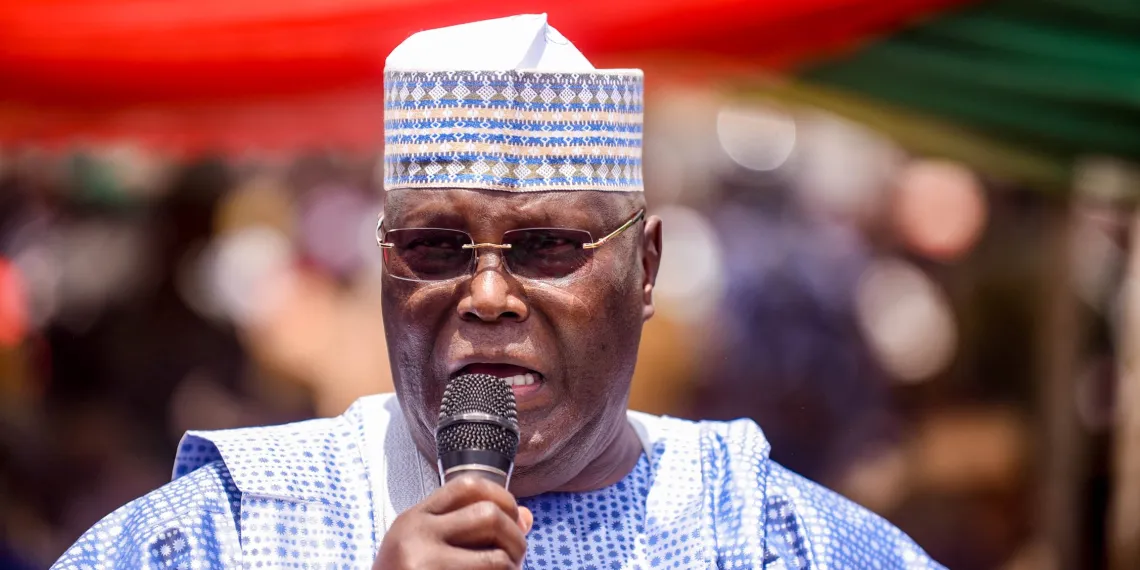
In a move that has jolted Nigeria’s political landscape, former Vice President Atiku Abubakar has formally resigned from the Peoples Democratic Party (PDP), setting the stage for what promises to be a turbulent lead-up to the 2027 presidential election.
Atiku’s exit was confirmed in a letter dated July 14, 2025, addressed to the chairman of his ward in Jada 1, Adamawa State. The letter cited a deviation from the PDP’s founding principles as the core reason behind his departure. Sources close to the former vice president revealed he is set to join the African Democratic Congress (ADC), the newly adopted opposition coalition platform gearing up to challenge President Bola Tinubu in the next election cycle.
This marks Atiku’s third defection from the PDP since 1999—each tied to his perennial presidential ambition. In 2006, he joined the Action Congress ahead of the 2007 elections, and in 2014, he defected to the APC before returning to the PDP. Now, as Nigeria inches toward another high-stakes election, Atiku appears poised to make a fresh run under the ADC.
His decision aligns with recent opposition realignments. On July 1, key political figures—including Peter Obi, Rotimi Amaechi, Nasir El-Rufai, and others—announced a merger under the ADC banner. The coalition named former Senate President David Mark as interim National Chairman and ex-Osun State Governor Rauf Aregbesola as interim National Secretary, signaling a serious challenge to the ruling APC.
Atiku’s media aide, Paul Ibe, confirmed the resignation, though he declined to give specifics about the former vice president’s next political move. However, insiders revealed that Atiku will soon formalize his membership with the ADC and officially declare his 2027 presidential ambition.
While supporters describe the move as strategic and timely, reactions across Nigeria’s political circles have been swift and polarized.
In Adamawa, Atiku’s home state, PDP leaders expressed joy rather than concern. State party chairman Tahir Shehu said the former vice president’s exit would have no adverse effect on the party’s chances in the 2027 election. Others saw his departure as a cleansing moment, with one chieftain, Luka Tumba, calling it “divine intervention,” accusing Atiku of being an electoral liability in the state.
National PDP figures, meanwhile, offered mixed reactions. Oyo State Governor Seyi Makinde said Atiku’s resignation wouldn’t dent the PDP, insisting the party remains a strong institution with or without him. However, party elder statesman Bode George was more critical, accusing Atiku of allowing his ambition to override internal party rules and the PDP’s zoning formula. George said the 2027 ticket would rotate to the South, effectively disqualifying Atiku under party tradition.
In sharp contrast, the APC launched a full-blown attack. National Publicity Secretary Felix Morka labeled Atiku a “political wanderer,” accusing him of treating political parties like stepping stones for personal ambition. APC Director of Publicity Bala Ibrahim described him as a serial presidential contestant lacking in ideology or discipline. “He’s not a politician; he’s just obsessed with power,” Ibrahim said in a phone interview.
Minister of Aviation and Aerospace Development, Festus Keyamo, went further, accusing Atiku of using his resignation to steal the spotlight during a national mourning period for former President Muhammadu Buhari. He also criticized Atiku for including the Nigerian Coat of Arms in his resignation letter, calling it a misuse of national symbols and a possible breach of the law.
Despite the storm of criticism, the ADC expressed delight at Atiku’s impending arrival. Bolaji Abdullahi, the coalition’s spokesperson, said Atiku’s formal entry would boost morale and possibly attract more political heavyweights to the opposition front. “It’s an open secret he’s been part of this coalition from the beginning. Now that it’s official, we’re confident many others will join him,” Abdullahi said.
As the dust settles, one thing is clear: Atiku’s latest political gamble has reset the board for 2027. Whether it leads him to the presidency or another defeat remains to be seen—but for now, the battle lines are drawn, and Nigeria’s political arena is heating up once again.
Ok