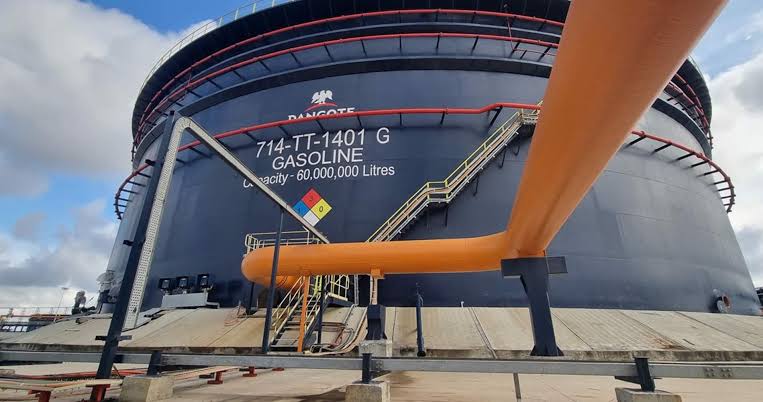
The recent drop in petrol prices across Nigeria has brought temporary relief to motorists, sparking optimism among consumers in major cities such as Abuja and Lagos. Retail petrol prices have fallen to between N885 and N945 per litre, down from highs of N910 to N955 depending on the filling station, following the federal government’s suspension of a planned 15 percent import duty on petrol and diesel. Dangote Refinery also reduced its November ex-depot price from N877 to N828 per litre, though as of Monday, ex-depot prices have risen slightly to between N854 and N860 per litre depending on the supplier. While these reductions may seem beneficial on the surface, industry experts warn that the lower rates are artificial and may not be sustainable.
Leaders from the Petroleum Products Retail Outlets Owners Association of Nigeria (PETROAN) and the Independent Petroleum Marketers Association of Nigeria (IPMAN) told DAILY POST that the current pricing structure does not reflect genuine market forces or the real costs of importing, refining, and distributing petrol. PETROAN President Billy Gillis-Harry said that the distorted prices could leave marketers without enough capital to maintain fuel purchases, potentially leading to shortages and subsequent price spikes. He stressed that fair and realistic pricing is essential for a stable market, cautioning that Nigeria’s downstream sector is becoming overly dependent on Dangote Refinery, a situation he described as unhealthy for both competition and stability. According to him, “Petrol prices are not determined by actual market fundamentals. The market is being distorted, and distorted markets always come with consequences.”
Chinedu Ukadike, IPMAN’s spokesperson, said the problem is compounded by structural weaknesses in Nigeria’s petroleum sector. While the Petroleum Industry Act theoretically deregulated the downstream market, only Dangote Refinery is fully operational, leaving government-owned refineries in Port Harcourt, Warri, and Kaduna inactive. A truly deregulated market requires multiple sources of supply, with prices determined by competition, cost variations, and supply diversity. Ukadike warned that with Nigeria relying on a single major refinery, market forces are effectively weakened, leaving marketers vulnerable to sudden price changes. He noted that if public and modular refineries were functional, competition would foster more stable and realistic pricing, reducing the risk of volatility and supply disruption.
Economists describe the current situation as a “false equilibrium,” where temporary price stability masks underlying structural weaknesses. Both PETROAN and IPMAN argue that relying on a single refinery heightens the risk of price instability, supply disruption, and capital shortages for marketers, ultimately threatening long-term fuel availability. Without structural reforms, Nigeria could experience recurring fuel scarcity or abrupt price hikes. While lower pump prices offer short-term relief to Nigerians dealing with inflation and economic hardship, industry experts caution that today’s artificially low rates may undermine the sustainability of fuel supply in the future. Expanding refining capacity, revitalizing public refineries, and encouraging real competition are critical to ensuring the stability and reliability of Nigeria’s petroleum market. Until these measures are taken, debates over petrol pricing will remain a recurring national challenge, balancing the immediate appeal of cheaper fuel with the need for long-term market stability.