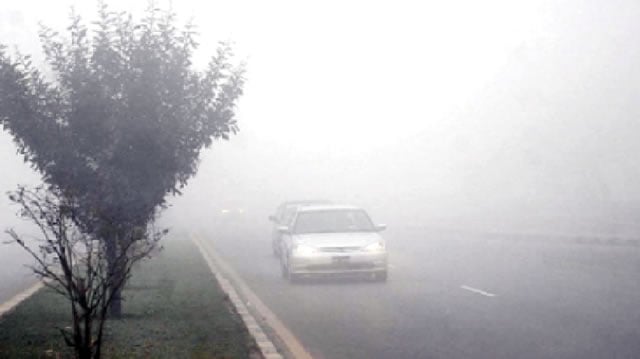
Residents of Kano State are grappling with an unusually harsh harmattan that has blanketed the city in cold, dust and thick fog for several days, disrupting economic activities and worsening health conditions, particularly for people with respiratory illnesses.
The severe weather, which began on Saturday, has been characterised by dust-laden winds and poor visibility, forcing many residents indoors and slowing daily life across the metropolis. For individuals living with asthma and other breathing-related conditions, the situation has become increasingly distressing.
Rukayya Bello, a journalist and asthma patient, said the weather has significantly affected her health and work routine.
“In my line of work, I am used to going out to the field to report and spending most days at the office,” she said. “But with this weather, I fear I might have an asthma attack. I have been on sick leave for three days now, and even then, I am not 100 per cent healthy.”
Other residents echoed similar concerns. Amina Sadiq said the dusty atmosphere has aggravated her condition. “For people like us with asthma, this kind of weather is very dangerous. Once I inhale too much dust, I start struggling to breathe, so I prefer to stay indoors until it clears,” she said.
Beyond health concerns, the harsh harmattan has taken a toll on economic activities. Musa Abdullahi, a commercial tricycle operator, said the cold mornings have drastically reduced passenger turnout.
“By 6 a.m., the roads are usually busy, but now everywhere is quiet,” he said. “Many people don’t come out early because of the cold, and that affects our daily income. I share this keke with someone — I use it in the morning and hand it over in the evening. With this weather, I’m not making as much as I used to.”
Across Kano, roads that are typically bustling in the early hours have appeared unusually calm, while many shops, markets and business centres are opening later than normal. The dense fog has also raised safety concerns for motorists due to reduced visibility.
On Tuesday, the Nigerian Meteorological Agency (NiMet) issued a weather advisory, urging residents and road users to exercise caution. The agency warned that dust particles would remain suspended in the air and advised people with asthma and other respiratory conditions to take appropriate precautions.
NiMet further cautioned that thick dust haze would affect Kano and other northern states, reducing horizontal visibility to 1,000 metres or less. Airline operators were advised to obtain airport-specific weather reports before flights.
Explaining the phenomenon, the Director of Climate Change at the Kano State Ministry of Environment and Climate Change, Umar Saleh Anka, linked the extreme conditions to a delayed onset of harmattan this season.
“The unusually cold and foggy weather we are experiencing in Kano is closely connected to the delayed arrival of harmattan this year,” Anka said in an interview. “When harmattan eventually sets in, it brings dry air, dust particles, low humidity and a sharp drop in temperature, which creates hazy and fog-like conditions, especially in the mornings and evenings.”
He noted that the combination of warm afternoons and very cold mornings is typical of the season. “Because the air is very dry and the skies are clear, heat escapes quickly at night, leading to very cold early mornings,” he explained.
Anka warned that the prevailing conditions pose serious health risks, particularly to vulnerable groups. “Low temperatures, dry air and airborne dust are known to worsen asthma, bronchitis and other respiratory illnesses,” he said. “This year is more challenging because lingering moisture from earlier rainfall is combining with dust, making the air more irritating.”
He advised residents — especially children, the elderly and people with respiratory conditions — to take preventive measures to reduce exposure.
“For vulnerable groups, including asthmatics and those with bronchitis, this mix of cold, dryness and dust can be especially uncomfortable and may trigger serious health episodes if not carefully managed,” he cautioned.
As the harsh harmattan persists, health experts and authorities continue to urge residents to stay indoors where possible, use protective face coverings, and seek medical attention if symptoms worsen.