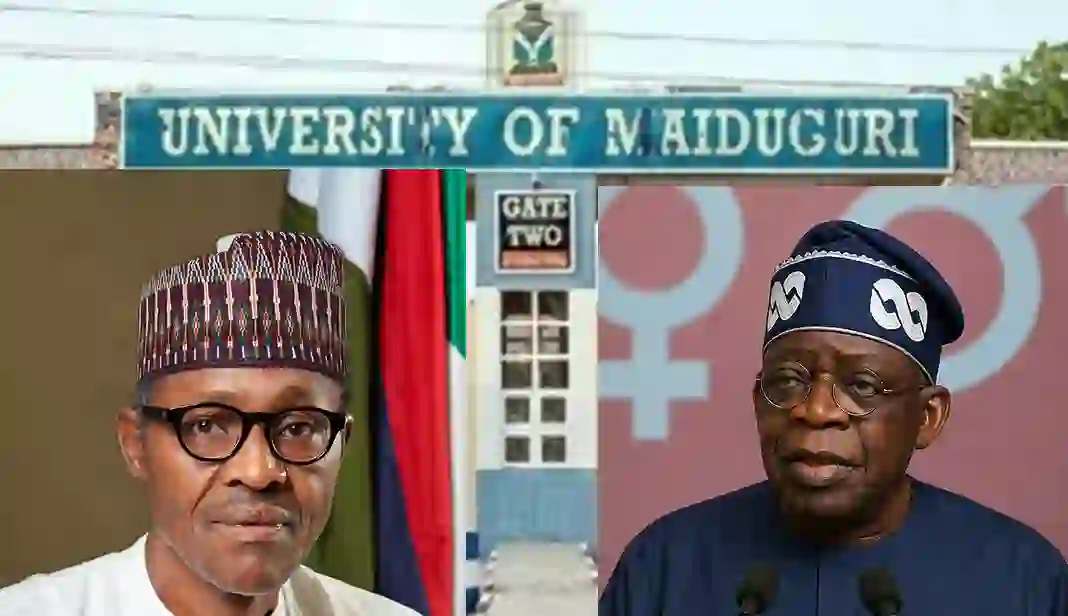
The Federal Government has defended its decision to rename the University of Maiduguri after the late President Muhammadu Buhari, calling it a tribute to a man whose leadership shaped modern Nigeria across two pivotal eras.
In a statement issued Friday by the Ministry of Education’s Directorate of Press and Public Relations, Minister of State for Education, Yusuf Tanko Sununu, stated that the name change reflects Buhari’s enduring contributions to national unity, institutional reform, and public accountability.
The government’s clarification comes amid growing debate over the renaming of the over five-decade-old institution located in Borno State. Some Nigerians have questioned the timing and symbolism of the gesture, while others have praised it as a rightful honour to a man who served both as military governor of the North-Eastern State and, decades later, as democratically elected president.
Sununu emphasized that the decision was made during a special Federal Executive Council (FEC) session chaired by President Bola Ahmed Tinubu in the days following Buhari’s death. The late president, who died at 82 in London, was buried in his hometown of Daura, Katsina State.
According to the Education Ministry, Buhari’s legacy is anchored in transformative reforms such as the Treasury Single Account (TSA), the Anchor Borrowers’ Programme, and the Economic Recovery and Growth Plan (ERGP), all of which helped redefine fiscal discipline and agricultural development in the country.
“This symbolic act of renaming the University of Maiduguri is not only to honour a statesman, but to inspire future generations about the power of integrity, discipline, and selfless service,” the minister noted.
He added that President Tinubu’s approval of the renaming signifies his commitment to education and national values, positioning the university as a living monument to Buhari’s vision of national rebirth.
As public opinion remains divided, the government insists that the move is aimed at enshrining Buhari’s legacy in a way that connects youth development with historical recognition — a message it believes the academic community and wider public will ultimately embrace.