The Federal Government has reportedly engaged a United States-based lobbying and public affairs firm in a $9 million contract to communicate Nigeria’s security efforts and response to violence affecting Christian communities to policymakers in Washington.
Documents filed with the United States Department of Justice reveal that DCI Group, a Washington-based lobbying firm, was contracted to engage US officials on Nigeria’s counterterrorism operations and its handling of allegations of religiously motivated violence.
The report said the agreement was executed on December 17, 2025, through Aster Legal, a Kaduna-based law firm acting on behalf of the National Security Adviser, Mallam Nuhu Ribadu. Under the terms of the contract, DCI Group is expected to outline Nigeria’s measures to protect Christian communities and help sustain US support for the country’s fight against jihadist groups operating across West Africa.
The arrangement is said to run for an initial six-month period ending June 30, 2026, with an automatic extension clause unless either party terminates the agreement with 60 days’ notice. Financial disclosures reportedly indicate that Nigeria has already paid $4.5 million as an advance retainer, with the total value of the contract set at $9 million.
The agreement provides for a monthly fee of $750,000, covering professional services and related expenses. The decision to engage a US lobbying firm comes amid renewed scrutiny in Washington over reports alleging the killing of Christians in Nigeria.
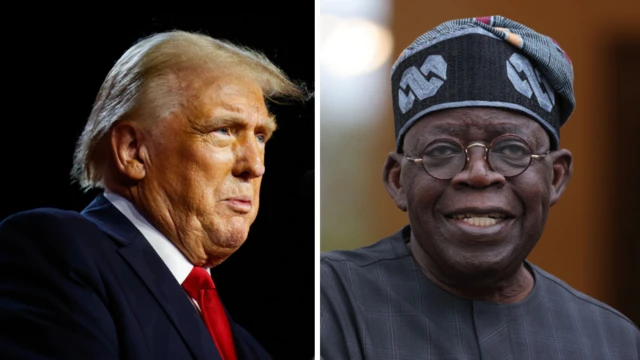
In October, US President Donald Trump redesignated Nigeria as a “country of particular concern,” citing claims of systematic violence against Christian communities—allegations the Nigerian government has consistently denied. US officials and lawmakers have accused the Federal Government of failing to adequately protect religious minorities.
Nigerian authorities, however, maintain that the country’s security challenges are driven primarily by terrorism, banditry, and organised criminal activity, rather than religious persecution.
Diplomatic tensions between both countries further escalated in November when Trump warned that the United States could consider military intervention if violence against Christians continued. Nigerian officials rejected the remarks, describing them as misinformed and not reflective of the complex security situation on the ground.