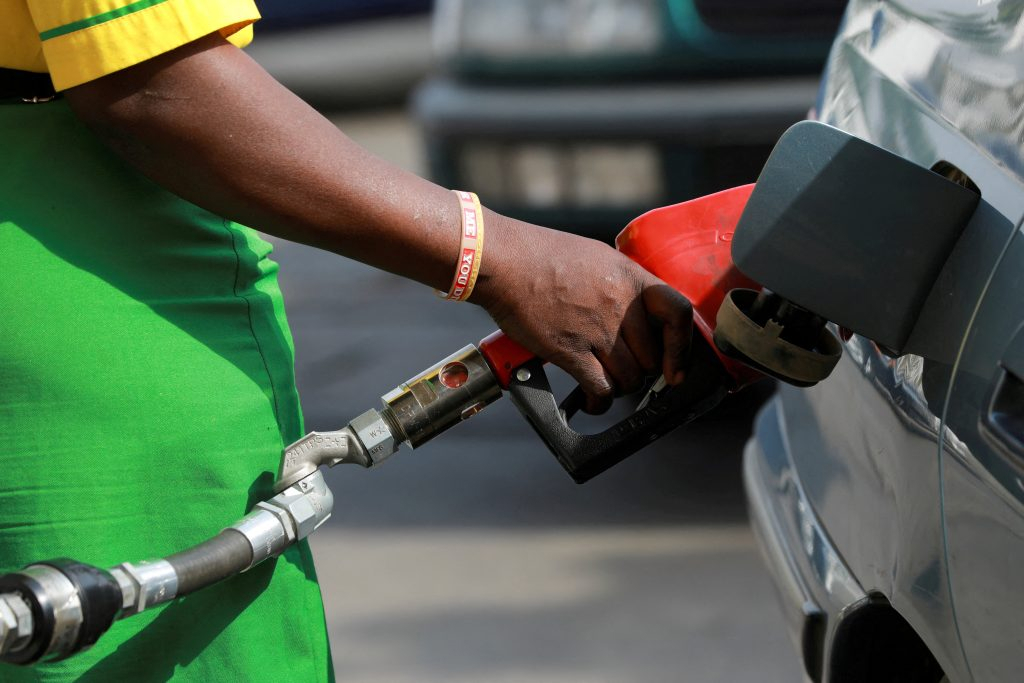
Petroleum products marketers have indicated that pump prices of petrol may decline nationwide in the coming days following a shift in price parity, with imported petrol now cheaper than products from the Dangote Refinery.
The President of the Independent Petroleum Marketers Association of Nigeria (IPMAN), Abubakar Maigandi, disclosed this in an interview on Monday. His comments followed data released by the Major Energies Marketers Association of Nigeria (MEMAN), which showed that the average cost of imported petrol is about ₦77 per litre lower than the Dangote Refinery’s gantry price of ₦799 per litre.
The development comes amid an ongoing debate between refiners and marketers. Last week, the Dangote Refinery urged marketers to boycott coastal petrol imports, claiming imported products were about ₦75 more expensive than locally refined fuel. However, the latest pricing data appears to have reversed that narrative, placing marketers in a fresh dilemma over sourcing decisions.
Despite the evolving price dynamics, petrol pump prices have remained high in many parts of the country. In Abuja, retail prices were selling between ₦839 and ₦905 per litre as of Monday. In contrast, some filling stations in Lagos had reduced prices to as low as ₦817 per litre—below the ₦839 per litre offered at MRS filling stations backed by the Dangote Refinery. The reductions have raised expectations of a broader, nationwide price adjustment.
Commenting on the situation, Maigandi said current market conditions could support a downward review of pump prices, provided the necessary enabling environment is in place. He noted that about 80 per cent of IPMAN members currently source their petrol directly from the Dangote Refinery.
According to him, logistics and transportation costs remain the major factors driving price differences across the country.
“Pricing depends on the volume purchased. Marketers buying more than two million litres enjoy a ₦20 per litre discount, while those purchasing five million litres and above get up to ₦25 per litre off the gantry price of ₦799,” Maigandi said.
He added that proximity to supply points also affects retail prices, explaining that stations in Lagos currently sell between ₦820 and ₦825 per litre, while prices in Abuja range from ₦870 to ₦875 per litre.
Maigandi further noted that increased competition—through the operation of additional refineries and sustained imports—would eventually drive prices lower. “Once more refineries come on stream and imports increase, competition will naturally push fuel prices down,” he said.
Recall that in January, the Dangote Refinery raised its gantry price to ₦799 per litre from ₦699, triggering a spike in petrol prices nationwide. In December last year, the refinery’s owner, Aliko Dangote, had pledged to reduce petrol prices to ₦739 per litre, a target that was largely unmet across most filling stations.
Meanwhile, global crude oil prices remained relatively stable on Monday evening, with West Texas Intermediate trading at $64.36 per barrel and Brent crude at $69.15 per barrel—levels that continue to influence domestic fuel pricing.