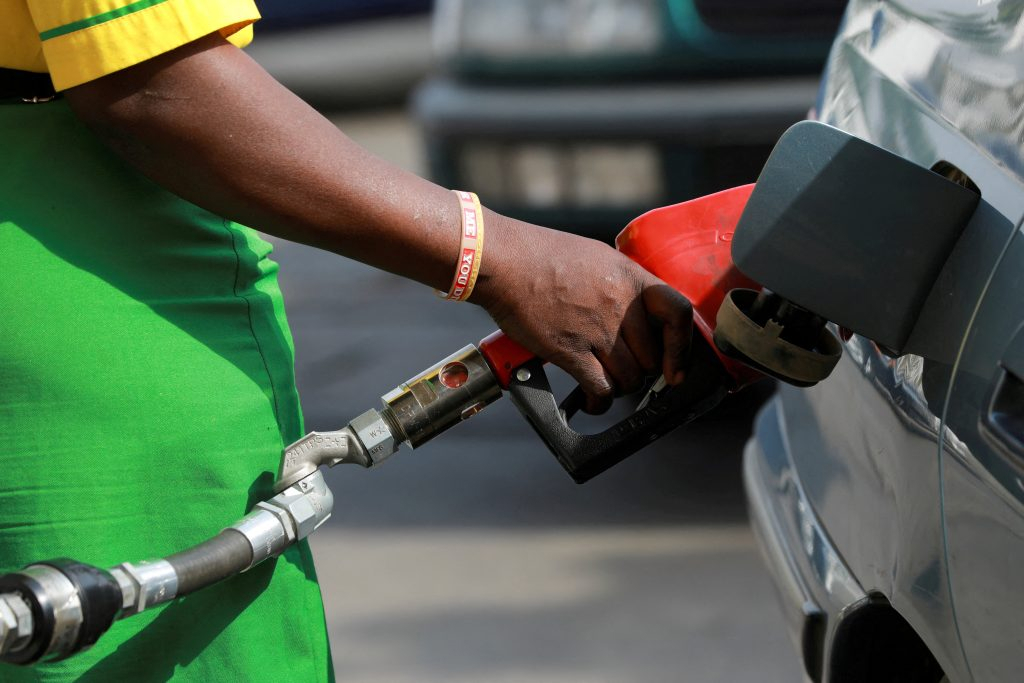
Nigerians are bracing for another surge in fuel prices after President Bola Tinubu approved a 15 per cent import duty on premium motor spirit (PMS), commonly known as petrol, and automotive gas oil (diesel).
The directive, revealed in a letter dated October 21, 2025, was communicated by the President’s private secretary, Damilotun Aderemi, to the Federal Inland Revenue Service (FIRS) and the Nigerian Midstream and Downstream Petroleum Regulatory Authority (NMDPRA). The approval follows a request by FIRS to align import duties with local market realities by applying the levy to the cost, insurance, and freight (CIF) value of imported fuel.
Experts predict that this move could push petrol prices above N1,000 per litre in most filling stations that rely heavily on imported fuel. In Abuja, petrol is expected to rise to between N950 and N960 per litre, while diesel could jump to N1,120–N1,140 per litre, an increase of nearly N100 per litre.
Data from NMDPRA reveals that between August 2024 and October 2025, Nigeria consumed 21.68 billion litres of PMS. Only 6.67 billion litres, or 31 per cent, came from local refineries, including Dangote Refinery, while the remaining 69 per cent, about 15.01 billion litres, was imported. This highlights the country’s continued dependence on foreign fuel supplies.
The landed cost of imported petrol stood at N839.97 per litre as of October 21, 2025, slightly lower than Dangote Refinery’s ex-depot price of N877 per litre, according to the Major Energy Marketers Association of Nigeria. Analysts say the import duty could give local refineries a competitive advantage over imported fuel.
The timing of the import levy comes amid a recent nationwide increase in fuel prices after Dangote Refinery and depot operators raised their ex-depot rates. Additionally, FIRS recently instructed banks, stockbrokers, and other financial institutions to withhold 10 per cent tax on interest earned from short-term securities.
Fuel consumers are now left to navigate the rising cost of petrol and diesel as the government moves to protect local refineries while adjusting import tariffs to domestic market realities.