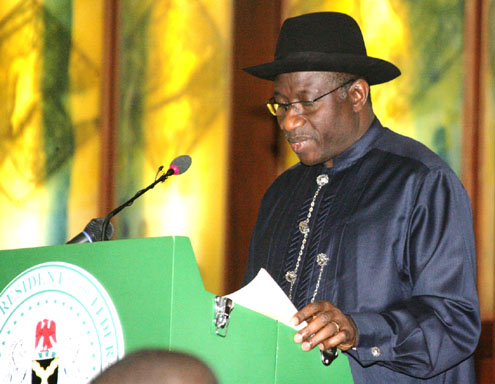
Former Nigerian President Goodluck Jonathan has renewed calls for urgent electoral reforms, insisting that the credibility of elections in the country depends on how the leadership of the Independent National Electoral Commission is appointed and warning that the unchecked trend of political defections is weakening democracy. Jonathan, represented by Ann Iyonu, Executive Director of the Goodluck Jonathan Foundation, spoke on Wednesday at the National Action Plan for Electoral Reform Dialogue, an event organised by the Abuja School of Social and Political Thought.
The former president acknowledged that Nigeria has made strides since its return to democratic rule in 1999 but noted that the electoral system remains riddled with flaws that must be addressed. He explained that free and fair elections cannot be achieved unless the process of appointing the INEC chairman is reformed to guarantee neutrality and public trust. Jonathan proposed that an independent panel, comprising representatives from the judiciary, civil society, academia, trade unions, and professional associations, should be responsible for screening and nominating candidates for the position. According to him, this would strengthen public confidence in INEC and improve the legitimacy of its decisions.
Jonathan also raised concerns about the rising wave of defections among politicians, describing it as one of the most destabilising forces in the political space. He lamented that elected officials often abandon the platforms under which they won elections without ideological justification, reducing political parties to instruments of personal ambition rather than pillars of democracy. To tackle this, he suggested the establishment of an independent Office of the Registrar of Political Parties with authority to regulate party operations, promote internal democracy, enforce discipline, and even declare the seats of defectors vacant. He pointed to Kenya and Malawi as examples where such measures have been used to safeguard the integrity of political systems, stressing that the people’s mandate belongs to the electorate, not individuals.
Beyond the issue of defections, Jonathan stressed the importance of resolving all election disputes before elected officials are sworn into office. He argued that allowing leaders facing unresolved cases to assume power only to be removed later by the courts creates confusion, disrupts governance, and erodes public confidence. Justice delayed in election matters, he said, amounts to justice denied not just to candidates but also to voters. To achieve quicker resolutions, he recommended streamlining the judicial process by reducing the number of courts authorised to handle governorship and presidential election petitions.
The former president concluded by emphasising that electoral reforms should not be seen as partisan initiatives but as a patriotic duty to strengthen Nigeria’s democracy. In his words, democracy goes beyond casting ballots—it is about building resilient institutions, promoting accountability, and protecting citizens.
Meanwhile, the Peoples Democratic Party has maintained that it has a pool of credible candidates ahead of the 2027 general elections. The party’s National Publicity Secretary, Debo Ologunagba, said on Arise TV’s Morning Show that Jonathan remains a member of the PDP, noting that he has not resigned from the party. He, however, declined to comment on whether former Labour Party presidential candidate Peter Obi would return to the PDP, pointing out that Obi has not made such an announcement. Ologunagba instead highlighted the party’s strength, praising Oyo State Governor Seyi Makinde as one of the party’s standout performers capable of winning the confidence of Nigerians. He added that the PDP today parades eminently qualified leaders and governors whose performance is visible and widely acknowledged by the public.