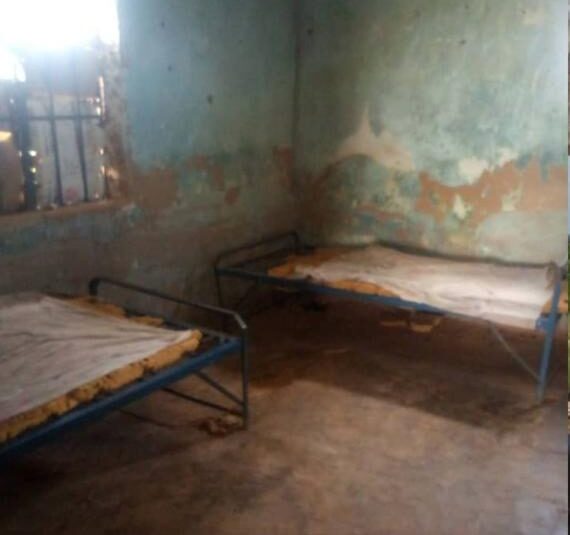
The only health centre in Dauraku community has become a symbol of government neglect as residents are forced to stay away from the crumbling building now overtaken by snakes and reptiles. Once the sole medical facility serving over 2,000 people, the clinic has deteriorated into an unsafe, unusable structure, leaving the community without access to basic healthcare.
Reports by Monitng, a civic technology platform, reveal a dire situation where the clinic’s walls are split by wide cracks and its roof leaks heavily during the rainy season, making it unfit for human use. Inside, there are no hospital beds, no medical equipment, and no electricity. Years of neglect have left the facility in ruins, with peeling, waterlogged walls and suffocating conditions due to lack of ventilation.
But it is not just the structural decay that has driven residents away. Snakes and other reptiles have turned the health centre into a nesting ground, posing a serious threat to anyone who dares enter. Fear of snake bites has forced locals to avoid the clinic entirely, even when faced with life-threatening emergencies.
The absence of doctors, nurses, and healthcare workers has compounded the crisis. Pregnant women are left to deliver at home without skilled medical care, while children and elderly patients must embark on long, treacherous journeys across poor roads to access the nearest hospital in the local government headquarters — a trip many cannot afford and some do not survive.
“This is happening in Katsina State, a region that has produced two former presidents of Nigeria,” Monitng’s report stated, highlighting the irony of such neglect in a state with significant political history. Yet rural communities like Dauraku remain forgotten, deprived of even the most basic health infrastructure.
Residents and civic groups are now calling on Katsina State Governor Dikko Radda to intervene urgently. They demand a total rehabilitation or complete reconstruction of the health centre, equipped with proper hospital beds, reliable solar-powered electricity, clean water, qualified healthcare personnel, and essential medical supplies.
Healthcare, they emphasize, is not a privilege but a right. The ongoing neglect of rural communities is unacceptable, and the people of Dauraku deserve access to safe and functional healthcare facilities.
As the calls for government action grow louder, the fate of Dauraku’s residents hangs in the balance, waiting for a response that could mean the difference between life and death for a forgotten community.