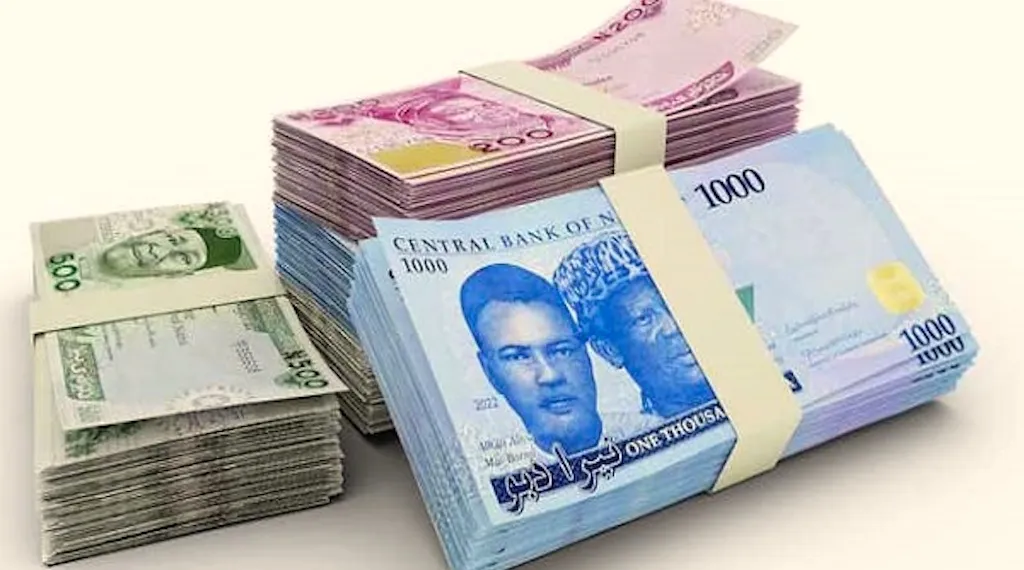
The Nigerian naira ended last week on a subdued note, falling to ₦1,532.34 per US dollar at the official foreign exchange market despite efforts by the Central Bank of Nigeria (CBN) to stabilize the currency through targeted interventions.
The local currency began the week on a strong note, rallying to a four-month high of ₦1,518.88/$ during the first trading session. However, those early gains were short-lived as the naira slid to ₦1,530.25/$ midweek, dipped further to ₦1,533.11/$, and ultimately settled at ₦1,532.34/$ by Friday. The currency traded within a range of ₦1,515/$ to ₦1,538/$ during the week at the Nigerian Foreign Exchange Market (NFEM).
Parallel market activity reflected similar volatility, with the naira trading between ₦1,535.00/$ and ₦1,544.00/$, underscoring the persistent demand-supply mismatch across Nigeria’s FX ecosystem.
Analysts say the CBN’s recent dollar injections helped to cushion some of the downward pressure but were insufficient to reverse the trend entirely. Financial experts at Cowry Assets Management noted in their weekly commentary that the naira’s performance was mixed across markets. While it gained marginally by 0.06% at the parallel market, it ended in negative territory at the official window.
The firm attributed the diverging trajectories to ongoing liquidity imbalances and an evolving supply landscape. However, analysts expressed optimism that higher oil production levels and elevated crude prices would enhance FX inflows, support external reserves, and potentially improve naira stability in the near term.
Their outlook is reinforced by fresh data from the Nigerian Upstream Petroleum Regulatory Commission, which revealed that average daily crude output (excluding condensates) rose to 1.51 million barrels in June—up from 1.45 million barrels per day recorded in May. The increase marks Nigeria’s first successful alignment with its OPEC quota in five months and signals improved production efficiency and stronger security in oil-producing regions.
In its weekly report, AIICO Capital Limited observed that the apex bank had been active in the market, intervening with dollar sales at both ends of the week to maintain relative calm. As a result, foreign reserves climbed by $422 million to reach $37.85 billion, up from $37.43 billion the previous week.
Looking ahead, attention is turning to the Central Bank’s Monetary Policy Committee (MPC) meeting beginning Monday. Market watchers anticipate that decisions taken during the session could shape the naira’s near-term trajectory and broader FX market sentiment.
However, analysts remain divided. Some believe the MPC may consider a mild rate cut in response to cooling inflation and improved currency stability, while others argue that easing policy prematurely could risk undermining recent FX gains and stoke inflationary pressures—especially in the context of ongoing food supply disruptions and global market risks.
According to a note from Comercio Partners, traders are currently adopting a wait-and-see approach. “The direction of the naira this week will depend largely on the tone and substance of the MPC’s communique,” the firm wrote.
As oil receipts improve and capital inflows begin to strengthen, the sustainability of the naira’s recovery may depend not just on intervention but also on consistency in macroeconomic policy direction.