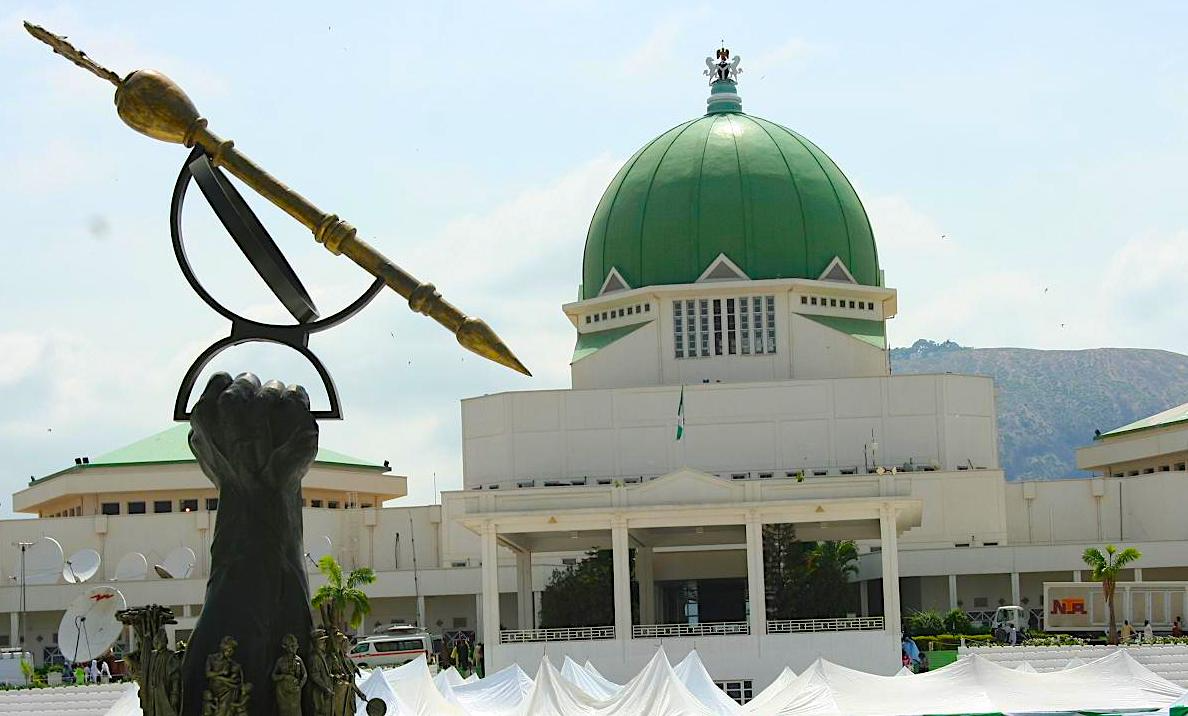
The National Assembly has approved President Bola Tinubu’s request to borrow ₦1.15tn from the domestic debt market, aimed at closing the funding gap in the 2025 budget and completing the government’s fiscal financing plan. Both the Senate and the House of Representatives endorsed the borrowing after reviewing reports from their respective debt management committees. This approval allows the Federal Government to raise the final tranche needed to cover the shortfall caused by the recent increase in the national budget.
In the Senate, the approval followed the presentation and adoption of a report from the Committee on Local and Foreign Debt, chaired by Senator Wamakko Magatarkada Aliyu (APC, Sokoto North). The committee noted that the 2025 Appropriation Act now sets total expenditure at ₦59.99tn, an increase of ₦5.25tn from the ₦54.74tn initially proposed by the Executive.
The upward revision widened the budget deficit to ₦14.10tn, of which ₦12.95tn had already been approved for borrowing. The newly sanctioned ₦1.15tn represents the remaining unfunded portion, completing the government’s deficit financing plan for the year. President Tinubu, in a letter read on the Senate floor last week, described the loan as necessary “to bridge the funding gap and ensure full execution of government programmes and projects under the 2025 fiscal plan.”
The Senate also adopted a motion by Senator Abdul Ningi (PDP, Bauchi Central), directing the Committee on Appropriations to monitor the use of the borrowed funds and ensure they are applied strictly for their intended purposes.
This latest approval adds to a series of borrowing measures by the Tinubu administration to sustain budget implementation amid shrinking fiscal space. Two weeks ago, the Senate endorsed a $2.847bn external borrowing plan, including a $500m Sovereign Sukuk, to fund infrastructure projects and refinance maturing Eurobonds. According to the Senate Committee on Local and Foreign Debt, $2.347bn of that package will come from international capital markets, while $500m will be raised through Sukuk bonds.
Senator Wamakko defended the borrowing as critical to maintaining economic stability and meeting 2025 funding obligations without disrupting ongoing projects. Senator Sani Musa (APC, Niger East), Chairman of the Senate Committee on Finance, emphasized that approval for the domestic loan was essential to ensure that the 2025 budget receives the required funding. Similarly, Senator Adetokunbo Abiru (APC, Lagos East), head of the Committee on Banking, Insurance, and Other Financial Institutions, explained that the loan would not worsen Nigeria’s debt profile, as it had already been accounted for in the 2025 deficit financing plan.
Senator Adams Oshiomhole (APC, Edo North) also defended the government’s approach, stating that borrowing is not inherently wrong when well-structured and directed at critical areas such as job creation and infrastructure development.
The approval comes amid growing public concern over Nigeria’s rising debt, which the Debt Management Office estimates at over ₦152.40tn as of mid-2025. While critics caution that continued borrowing could push the country toward unsustainable debt levels, officials argue that carefully planned loans remain vital for financing infrastructure, sustaining growth, and maintaining investor confidence.
The House of Representatives also granted approval for the ₦1.15tn loan after adopting the report of its Committee on Aids, Loans, and Debt Management, chaired by Abubakar Nalaraba (APC, Nasarawa). The committee urged the House to authorize the borrowing to close the unfunded deficit created by the recent upward review of the 2025 budget. The request was formalized in a letter from President Tinubu to Speaker Tajudeen Abbas and read by Deputy Speaker Benjamin Kalu. The President cited the Fiscal Responsibility Act (FRA), 2007, noting that all new borrowings by the Federal Government require legislative approval.
Tinubu explained that while the budget was revised upward to ₦59.99tn, the borrowing provision initially approved stood at ₦12.95tn, leaving an unfunded gap of ₦1.15tn. The new domestic loan will now cover this shortfall and ensure the full implementation of the 2025 budget.
Following deliberations, the House endorsed the request, paving the way for the Federal Government to raise the additional funds from the domestic debt market. The approval comes after reports that plenary on Tuesday was suspended due to lawmakers’ frustration over slow capital project execution, with no item on the Order Paper considered. With the National Assembly’s backing, the Tinubu administration now has the green light to complete its 2025 fiscal funding plan, relying on domestic borrowing to bridge budget gaps and sustain government operations.