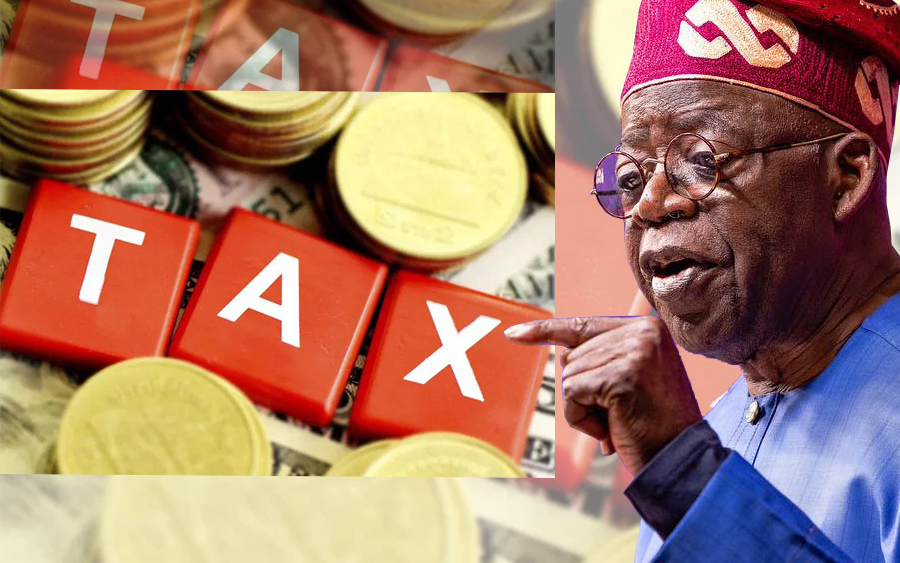
Nigeria on Thursday commenced the implementation of its new tax laws and fiscal reforms, a move that has continued to generate public debate and concern across the country.
President Bola Ahmed Tinubu had earlier reaffirmed that the tax regime, signed into law in June 2025, would take effect on January 1, 2026, despite calls from labour unions, lawmakers, and civil society groups for a temporary suspension to allow for further review.
Among those who opposed the immediate rollout were the Nigeria Labour Congress (NLC), the Minority Caucus of the House of Representatives, former Senate Leader Ali Ndume, human rights lawyer Femi Falana (SAN), former Minister of Education Oby Ezekwesili, Bauchi State Governor Bala Mohammed, and several opposition parties.
Concerns intensified after a member of the House of Representatives, Abdulsamman Dasuki, alleged that changes had been made to the gazetted version of the tax laws. Following the controversy, the National Assembly leadership directed that the laws be re-gazetted to address the concerns raised.
Defending the reforms, President Tinubu assured Nigerians that the new tax laws would not impose additional financial burdens on citizens. Similar assurances were given by the Chairman of the Presidential Fiscal Policy and Tax Reforms Committee, Taiwo Oyedele, who said the reforms were necessary to strengthen Nigeria’s revenue system and reduce fiscal inefficiencies.
Further clearing the way for implementation, the Federal Capital Territory High Court, presided over by Justice Bello Kawu, dismissed a suit seeking to halt the enforcement of the tax laws.
Despite these developments, public anxiety has persisted, with concerns focusing on possible effects on personal incomes, prices of goods and services, businesses, and corporate operations.
On Wednesday, economist and accountant Prof. Godwin Oyedokun urged Nigerians to avoid panic and seek proper understanding of the reforms, stressing that misinformation has contributed to widespread fear.
According to Oyedokun, the primary aim of the new tax laws is to improve revenue efficiency rather than increase hardship for citizens.
“The objective is to block leakages, strengthen compliance, and reduce Nigeria’s overdependence on oil revenue,” he said, noting that the country’s tax-to-GDP ratio remains among the lowest globally.
He explained that the reforms are designed to broaden the tax base rather than impose across-the-board tax hikes, allowing the government to fund critical sectors such as infrastructure, healthcare, education, and security without excessive borrowing.
Low-Income Earners
Addressing concerns about the impact on vulnerable Nigerians, Oyedokun said most low-income earners are unlikely to be directly affected, as existing personal income tax thresholds and exemptions remain in place.
“The greater responsibility will fall on higher-income earners, large corporations, and sectors with historically weak compliance,” he said.
However, he cautioned that indirect effects could arise if businesses pass increased compliance costs on to consumers, particularly amid inflationary pressures.
Implications for Businesses
For businesses, Oyedokun acknowledged that the reforms may initially increase compliance demands due to stricter reporting requirements and enforcement.
“These measures are meant to ensure fairness so that compliant businesses are not disadvantaged while others evade taxes,” he said.
He added that, over time, a transparent and predictable tax system could support private-sector growth through improved infrastructure, better public services, and reduced policy uncertainty.
Call for Accountability
Oyedokun urged Nigerians to remain informed and engaged as the reforms take effect, emphasising the need for public education and dialogue with tax authorities.
He also stressed that the government must ensure accountability and transparency in the use of tax revenues.
“Taxes must translate into visible public value. Without service delivery, even well-designed tax laws will face resistance,” he said.
According to him, the long-term success of the new tax regime will depend on trust, effective communication, and responsible governance.
“There may be short-term discomfort, but widespread harm is not inevitable if implementation is fair and sensitive to current economic realities,” he added.