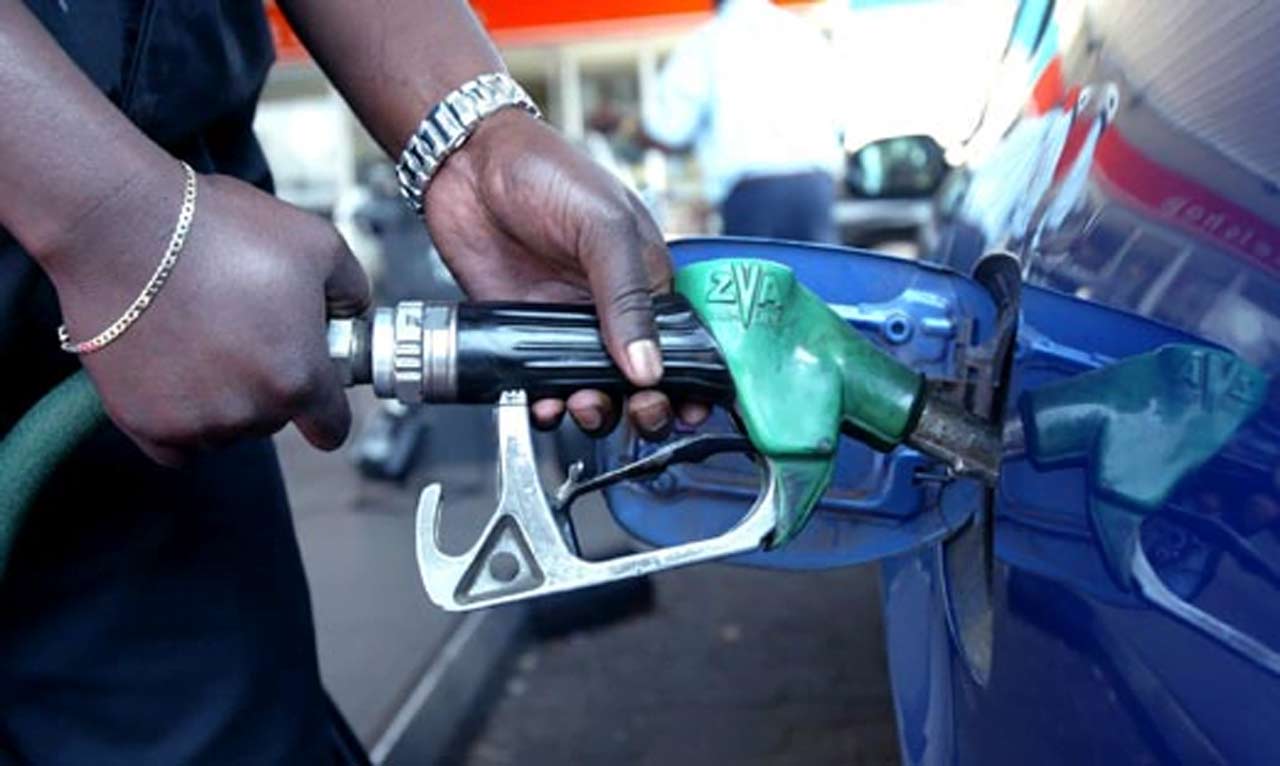
The price of petrol in Nigeria is on the verge of hitting N900 per litre as market dynamics tighten, driven by rising global oil prices and fresh supply decisions by OPEC+. Industry stakeholders have warned that the pump price could cross the N900 threshold within the week if crude oil continues trading around $70 per barrel, compounded by the ongoing volatility in Nigeria’s foreign exchange market.
Over the weekend, petroleum depots across the country quietly adjusted their ex-depot prices upwards, moving from an average of N820 per litre last Thursday to as high as N870. Despite this sharp increase, many filling stations in Lagos and Ogun States have, for now, kept their pump prices between N865 and N875 per litre. However, early signs of a wider adjustment are beginning to surface. For instance, the Matrix filling station located at Kara, along the Lagos-Ibadan Expressway, displayed N910 per litre on Saturday, while Rainoil in Ibafo was seen selling petrol at N900 on Sunday. Marketers suggest that stations adjusting prices have received new consignments based on the latest, higher depot rates.
Data sourced from Petroleumprice.ng showed a broad range of depot prices over the weekend. Companies such as Aiteo, Aipec, A.A. Rano, and Emadeb were selling petrol at N865 per litre, while NIPCO, Matrix, Sahara, and Bono supplied retailers at N870. Dangote, however, offered a slightly lower rate of N858 per litre. On the high end of the spectrum, firms like Fynefield, Mainland, Sigmund, Ever, and Zone 4 had depot prices reaching N900 per litre, signaling that a nationwide price surge is imminent.
Hammed Fashola, the National Vice President of the Independent Petroleum Marketers Association of Nigeria (IPMAN), has attributed the rising petrol prices to a combination of crude oil market volatility and the fluctuating naira exchange rate. He advised that market watchers and consumers should expect a clearer direction by Monday, as the situation unfolds in the downstream sector.
The petrol price hike is also being influenced by recent developments within the global oil market. On Sunday, OPEC+, a coalition of oil-producing nations that includes non-OPEC members like Russia and Kazakhstan, agreed to increase crude oil production by 547,000 barrels per day starting in September. This production boost is part of an aggressive strategy to reclaim lost market share amidst geopolitical tensions and potential supply disruptions stemming from Russia’s involvement in the ongoing Ukraine conflict.
According to Reuters, this new output increase reverses the alliance’s largest production cuts and includes an additional output quota for the United Arab Emirates. In total, about 2.5 million barrels per day will be added to the global market, equivalent to roughly 2.4 percent of worldwide oil demand. Despite the increase in output, oil prices have remained resilient. Brent crude, the international benchmark, closed near $70 per barrel on Friday, recovering from an April low of $58 per barrel. Analysts attribute this price firmness to a combination of rising seasonal demand and shrinking global inventories.
Amrita Sen, co-founder of Energy Aspects, noted that OPEC+ is buoyed by the current price levels, which reflect a robust demand environment and tight supply conditions. She emphasized that market fundamentals appear strong enough to support elevated prices, even as production ramps up.
OPEC+ is expected to reconvene on September 7, where they may consider reinstating an additional round of production cuts amounting to 1.65 million barrels per day. These cuts, currently in effect until the end of next year, could be strategically reintroduced if market conditions warrant tighter control over supply.
This recent production strategy marks a shift in OPEC+’s approach. After years of curtailing output to prop up prices, the group has gradually increased production since April in response to calls from global stakeholders, particularly the United States, urging higher output to ease supply pressures. Beginning with a modest hike of 138,000 barrels per day in April, OPEC+ followed up with larger increases of 411,000 barrels in May, June, and July, a 548,000 barrels increment in August, and now a 547,000 barrels addition scheduled for September.
Meanwhile, geopolitical factors continue to influence market dynamics. The United States is intensifying diplomatic efforts to persuade India to scale back its crude oil purchases from Russia, as part of a broader campaign aimed at pressuring Moscow into peace negotiations over the Ukraine war. These geopolitical maneuverings, coupled with OPEC+’s production adjustments, are adding to the uncertainty surrounding global oil prices.
As Nigeria grapples with these global forces, the downstream sector faces significant challenges. With depot prices already reflecting the new cost realities, widespread pump price increases appear inevitable. Industry experts warn that unless there is an unexpected reversal in crude oil prices or forex rates, Nigerians should brace for petrol prices well above N900 per litre in the coming days.