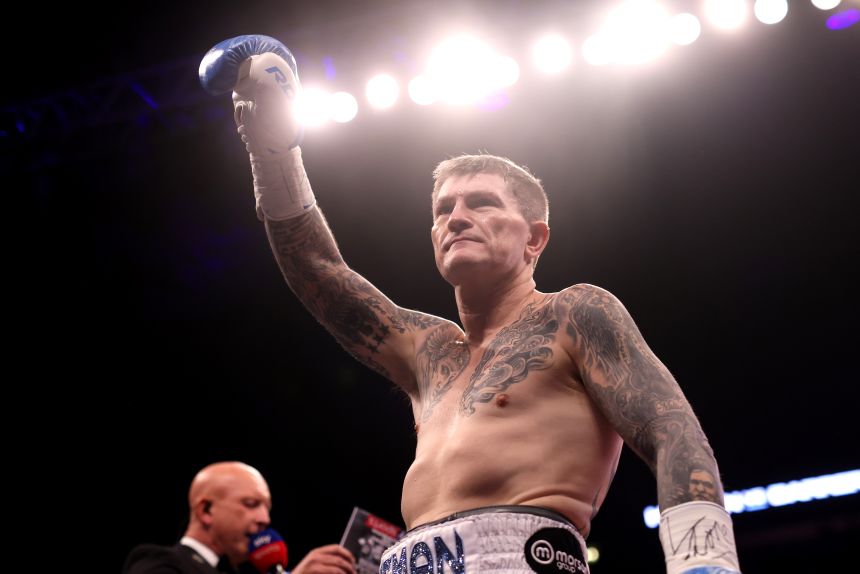
The boxing world is reeling after the sudden death of British sporting icon Ricky Hatton, who was found dead at his home in Greater Manchester on Sunday morning. He was 46.
Greater Manchester Police confirmed that officers were called to Hatton’s property on Bowlacre Road in Gee Cross, Hyde, at around 6:45 am, where his body was discovered. Authorities said there were no suspicious circumstances surrounding his death, though a cordon was placed around the residence as standard procedure.
Nicknamed “The Hitman,” Hatton rose to fame as one of Britain’s greatest-ever boxers, building a legacy of grit, resilience, and crowd-pleasing performances. Over the course of a glittering career, he fought 48 times, securing 45 victories and suffering only three defeats. His most memorable triumphs came against Kostya Tszyu and Jose Luis Castillo — fights that cemented his reputation as a working-class hero from Manchester.
Hatton retired in 2012 but had been preparing for a sensational return to the ring. He was set to fight UAE boxer Eisa Al Dah in Dubai this December, and in the days before his death, he posted a training video on Instagram with the message: “Evening run in the bag. Don’t you worry about that our kid.”
Outside the ring, Hatton’s story was marked by openness and vulnerability. He spoke candidly about his struggles with mental health and depression after retirement, becoming a voice for honesty in a sport often defined by bravado. Despite those personal battles, he remained heavily involved in boxing as a trainer and promoter. His son, Campbell Hatton, also briefly pursued a professional career before retiring earlier this year.
For fans across Britain and beyond, Ricky Hatton represented more than titles and trophies. He was the embodiment of Manchester’s fighting spirit — humble, determined, and endlessly relatable. His passing, just months before a planned comeback, has left the boxing community and his supporters worldwide in shock.