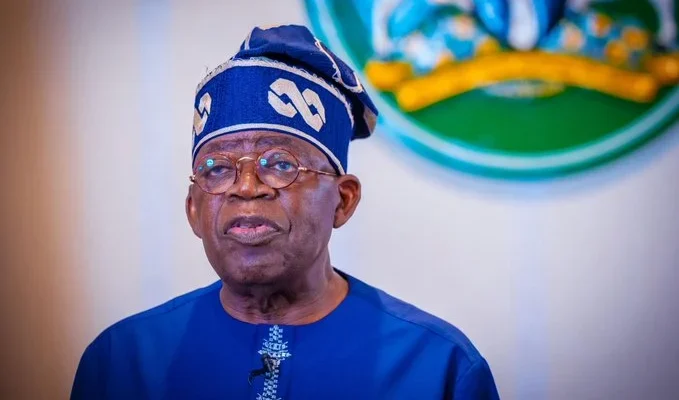
President Bola Ahmed Tinubu has asked the House of Representatives to approve a plan to raise fresh funds worth $2.347 billion from the international capital market, along with an additional $500 million through Nigeria’s first-ever Sovereign Sukuk issuance. The proposed financing is part of the government’s plan to support the 2025 national budget and refinance the country’s maturing Eurobonds.
The request, presented to lawmakers by Speaker Abbas Tajudeen during Tuesday’s plenary session, outlines a broader financial strategy that blends traditional Eurobond borrowing with non-interest Islamic finance. Tinubu explained that the borrowing plan aligns with the provisions of the 2025 Appropriation Act, and is crucial for bridging Nigeria’s budget deficit, refinancing due debts, and expanding access to diversified global funding sources.
According to the President, the 2025 budget projects a N9.28 trillion new borrowing requirement, with N1.84 trillion (approximately $1.229 billion) expected to come from external sources. He emphasized that this financial step is in line with Sections 21(1) and 27(1) of the Debt Management Office (DMO) Act, 2003, empowering the government to raise funds through approved channels.
Tinubu’s letter to the House requested approval to secure the funds through several possible instruments — including Eurobond issuance, loan syndication, bridge financing, or direct borrowing from international financial institutions. The goal, he said, is to partly fund the 2025 budget deficit and refinance Nigeria’s $1.118 billion Eurobond maturing in November 2025.
He described the borrowing plan as a proactive move designed to prevent default and uphold international best practices in debt capital management. Tinubu added that the final borrowing terms would depend on market conditions at the time of the transactions, assuring lawmakers that the Federal Ministry of Finance and the DMO would work closely with financial advisers to secure the most favorable terms possible.
In a separate but related appeal, the President sought parliamentary approval for a $500 million debut Sovereign Sukuk, marking Nigeria’s first venture into the international Islamic finance market. The Sukuk, which mirrors successful domestic issuances that have raised over N1.39 trillion since 2017, will focus on funding key infrastructure projects and broadening the nation’s investor base.
Tinubu explained that this move would help Nigeria diversify its funding sources, attract global investors from Islamic finance hubs, and deepen the nation’s sovereign securities market.
However, this request comes amid rising public concern about Nigeria’s mounting debt levels. A review of Central Bank of Nigeria (CBN) data shows that the Tinubu administration has spent nearly $9.9 billion servicing external debts between June 2023 and August 2025.
The figures reveal a consistent outflow in 2025 — with $302.2 million paid in August, $179.9 million in July, and $143.3 million in June. Earlier months saw even higher payments, including $632.2 million in March and $557.7 million in April.
Similarly, data from the Debt Management Office (DMO) indicates that Nigeria’s total public debt climbed to N149.3 trillion as of March 31, 2025, up from N144.6 trillion recorded in December 2024. The increase was driven by both domestic and external borrowings — with domestic debt rising by N4.4 trillion and external debt increasing by N350 billion within the same period.
Despite mounting concerns, Tinubu’s administration insists that the proposed borrowing is a strategic fiscal move — one aimed at stabilizing Nigeria’s economy, maintaining investor confidence, and ensuring smooth financing for critical national projects in 2025.