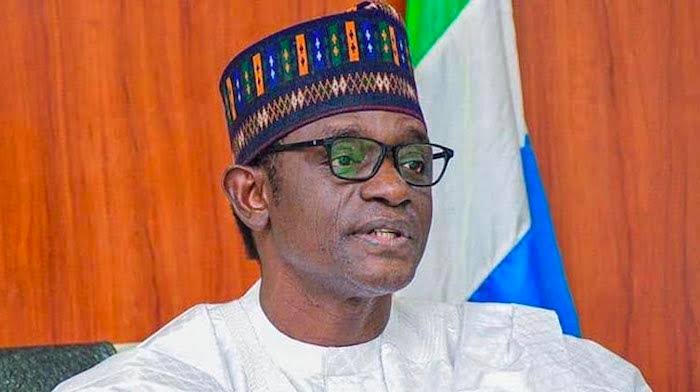
Yobe State Governor Mai Mala Buni has pledged to brief President Bola Ahmed Tinubu on the successes and challenges confronting his state, including the security implications of Niger Republic’s withdrawal from the Economic Community of West African States (ECOWAS).
Buni also highlighted concerns over inadequate resources, equipment and manpower as the security situation in the region continues to place pressure on states in Nigeria’s North-East.
The governor’s position underscores the difficult security environment confronting communities in the region, where Nigerian authorities continue to battle insurgency, terrorism and other forms of insecurity.
In the statement circulated by multiple outlets, Buni said he would communicate both the achievements and difficulties experienced by the state to President Tinubu.
“I will share your successes and challenges with President Tinubu, especially Niger’s withdrawal and the inadequacy of resources, equipment and manpower.”
The reference to Niger’s withdrawal is significant because the country’s departure from ECOWAS has altered the regional security and diplomatic environment.
Niger, alongside Mali and Burkina Faso, formally left ECOWAS in January 2025 after the three military-led governments rejected demands to restore civilian rule and criticised the regional bloc’s sanctions and diplomatic pressure.
The three countries subsequently strengthened their own regional alliance through the Alliance of Sahel States.
For Nigeria, developments in Niger are particularly important because of the two countries’ long border and shared security concerns.
The North-West and North-East regions continue to face threats from armed groups, while instability in neighbouring Sahel countries has created additional concerns over cross-border movement, weapons trafficking and the movement of militant groups.
Yobe, one of the states at the centre of Nigeria’s long-running battle against Boko Haram and other insurgent groups, has experienced the consequences of the regional security crisis for more than a decade.
The state has also had to deal with the humanitarian consequences of insecurity, including displacement and disruption to livelihoods.
Buni’s comments about inadequate resources, equipment and manpower therefore point to one of the central challenges facing security agencies operating in the region.
The effectiveness of military and security operations depends not only on the number of personnel deployed but also on access to equipment, intelligence, logistics and sustained funding.
The Nigerian government has repeatedly said it is strengthening the country’s security architecture and providing additional resources to the armed forces and other security agencies.
President Tinubu has also made security one of the major priorities of his administration.
In recent engagements, the President has maintained that his government is restructuring security operations to confront terrorism, banditry and kidnapping.
However, the persistence of attacks and insecurity in parts of the country means state governors continue to demand stronger federal intervention.
Buni’s planned briefing to Tinubu therefore provides another indication of the continuing dialogue between state governments and the Federal Government over the country’s security challenges.
For Yobe, the situation has an additional regional dimension.
The state’s location near the borders with Niger and other parts of the Lake Chad Basin means developments beyond Nigeria’s borders can directly affect its security environment.
The withdrawal of Niger from ECOWAS has consequently become more than a diplomatic issue for states such as Yobe.
It also raises questions about regional security cooperation and the ability of neighbouring countries to coordinate their response to armed groups operating across national boundaries.
The Nigerian government has continued to work with countries around the Lake Chad Basin through regional security arrangements, while the Multinational Joint Task Force remains an important mechanism for combating insurgency in the wider region.
But the challenges remain substantial.
Buni’s reference to shortages in equipment and manpower highlights the need for sustained investment if security forces are to maintain pressure on insurgent groups and protect vulnerable communities.
The governor’s pledge to take those concerns directly to Tinubu also places the issue within the broader national security conversation.
As the Federal Government prepares for the 2027 election cycle, security will remain one of the major issues on which Nigerians will assess the administration.
For communities in the North-East, however, the debate is less about politics and more about whether security forces have the resources necessary to protect lives, communities and livelihoods.
Buni’s planned engagement with the President is therefore expected to focus on both the progress already recorded and the challenges that remain.
The governor’s message is ultimately a call for the Federal Government to consider the realities confronting states on the front line of Nigeria’s security crisis.