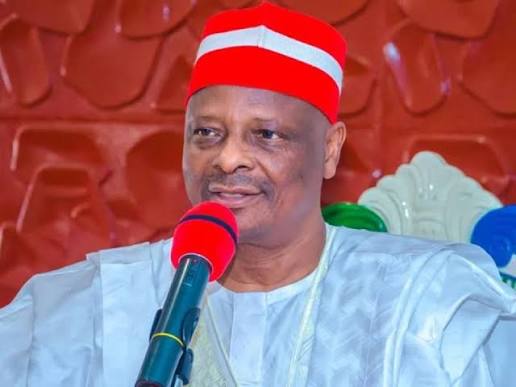
Former Kano State Governor and Nigeria Democratic Congress (NDC) vice-presidential candidate Rabiu Musa Kwankwaso has urged Nigerians to reject divisive politics and use the 2027 general election to demand competent leadership.
Kwankwaso’s comments followed controversial remarks by Islamic cleric Sheikh Sani Yahaya Jingir concerning the possibility of retaining a Muslim-Muslim presidential ticket in the 2027 election.
Jingir’s comments triggered criticism from several quarters, with Kwankwaso becoming one of the prominent political figures to publicly reject what he described as rhetoric capable of deepening religious and political divisions.
In a statement issued in Kano, Kwankwaso said statements promoting division and disunity should be discouraged, particularly when they come from influential religious leaders.
He said political and religious leaders have a responsibility to promote truth, unity and reconciliation.
Kwankwaso also specifically rejected the suggestion that the people of Kano supported the divisive remarks.
He said the people of Kano should not be presented as endorsing rhetoric capable of polarising the country.
Arise News reported that Kwankwaso described Jingir’s comments as divisive and detrimental to national unity.
The former governor’s intervention comes at a politically significant period as Nigeria moves closer to the 2027 general election.
The Muslim-Muslim ticket remains one of the most sensitive political questions in the country following President Bola Tinubu’s 2023 victory alongside Vice President Kashim Shettima.
Supporters of the arrangement have defended it as a political choice rather than a religious strategy, while critics have repeatedly argued that Nigeria’s religious diversity should be reflected in the country’s highest political offices.
Kwankwaso’s latest comments place him firmly on the side of those calling for greater caution around religious politics.
He argued that political and religious leaders must be conscious of the potential consequences of statements that could undermine national cohesion.
The former Kano governor also connected the issue to the 2027 election itself.
According to his statement, Nigerians will have an opportunity during the election to reward good governance and reject poor performance.
Kwankwaso specifically criticised the current administration, saying Nigerians would have the opportunity to express their judgement at the polls.
His intervention is politically significant because of his influence in northern Nigeria.
Kwankwaso was the presidential candidate of the New Nigeria Peoples Party in the 2023 election and recorded particularly strong support in Kano.
He is now part of the opposition NDC structure as its vice-presidential candidate.
That position gives his comments additional significance as opposition politicians seek to build a coalition capable of challenging the ruling All Progressives Congress in 2027.
The controversy surrounding Jingir’s remarks has also exposed the increasingly important role religion may play in the next presidential contest.
Nigeria’s political parties have historically relied on religious and regional balancing when selecting presidential and vice-presidential candidates.
With the 2027 contest taking shape, questions about whether the country will again see a Muslim-Muslim ticket are likely to remain prominent.
Kwankwaso’s intervention suggests that the opposition will attempt to make national unity part of its campaign message.
However, his comments also carry political implications because the NDC will need to convince voters that its own proposed leadership structure can transcend regional and religious divisions.
For now, Kwankwaso’s message is that political competition should not come at the expense of national cohesion.
He has called on political and religious leaders to promote unity and reconciliation while urging voters to use the 2027 election to judge the performance of the government.
The statement adds another layer to what is already shaping up to be a highly contested presidential election.