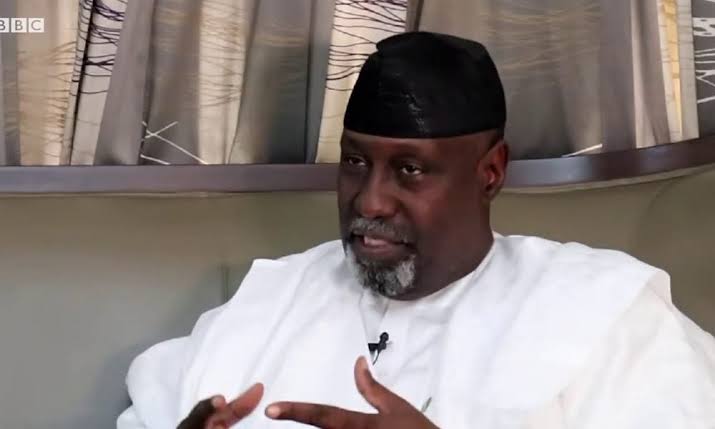
APC chieftain Farouk Aliyu says the ruling party will not tolerate conduct capable of creating divisions within its ranks after Nyesom Wike described some governors as “lazy” and “419ners.”
An All Progressives Congress (APC) chieftain, Farouk Aliyu, has warned Minister of the Federal Capital Territory Nyesom Wike against comments capable of creating divisions within the ruling party.
Aliyu spoke on Arise Television’s Morning Show on Thursday in reaction to remarks by Wike in which the FCT minister described some governors as “lazy” and “419ners.”
Aliyu said the language used by Wike was inappropriate and that APC members did not accept the description of the governors.
“The language Nyesom Wike used to describe governors as ‘419ners’ or ‘lazy’ is in bad taste. All members of the APC reject that comment,” he said.
He also warned that the APC would not allow Wike to reproduce within the ruling party the type of internal disputes that have characterised his relationship with the Peoples Democratic Party (PDP).
Wike remains a PDP member while serving as a minister in the APC-led Federal Government under President Bola Tinubu.
His political activities have nevertheless increasingly intersected with the 2027 election, particularly through the Rainbow Coalition in Rivers State, which is supporting Tinubu’s re-election bid.
Aliyu’s comments illustrate the tensions that can arise from Wike’s unusual position: a PDP member serving in an APC administration while publicly engaging with members and political structures associated with the ruling party.
The latest disagreement comes against the backdrop of wider political manoeuvring ahead of the 2027 general elections.
Wike has remained one of the most prominent political figures associated with the Tinubu administration despite retaining his membership of the PDP, while APC leaders continue to debate the role of political allies who operate across party lines.
Aliyu’s warning was directed at Wike’s public comments and political conduct rather than announcing any formal disciplinary action against the minister.
The exchange highlights the increasingly fluid political alignments surrounding Nigeria’s 2027 election, as politicians and parties attempt to consolidate support ahead of the presidential and legislative contests.