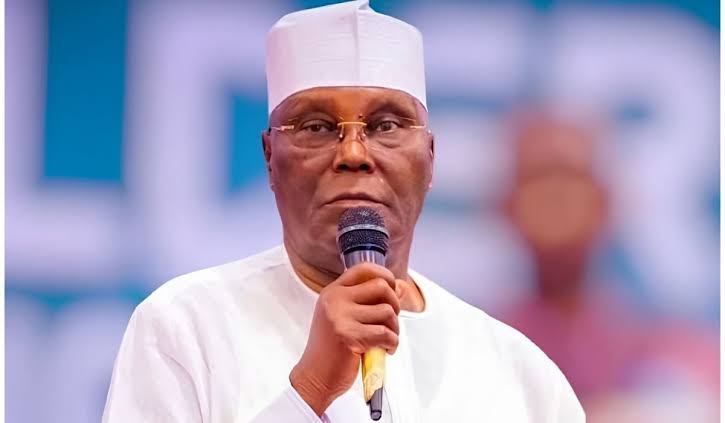
Former Vice President Atiku Abubakar says Nigeria must tackle the rising cost of food, fuel and transportation alongside expanding nutrition programmes to address child malnutrition.
Former Vice President Atiku Abubakar has called for urgent action to address child malnutrition in Nigeria, linking the problem to the rising cost of food, transportation and energy.
In a statement issued by his Senior Special Assistant on Public Communication, Phrank Shaibu, Atiku described child malnutrition as one of the most serious consequences of the country’s cost-of-living pressures.
He argued that rising energy and transportation costs increase the cost of moving agricultural produce from farms to markets and ultimately place additional pressure on household food budgets.
Atiku said policymakers should not consider nutrition separately from broader economic conditions.
“When fuel becomes expensive, transporting tomatoes from the farm becomes expensive. Taking rice to the market becomes expensive,” he said.
He also called for greater investment in treatment for severely malnourished children, stronger maternal and child nutrition programmes and improved monitoring to ensure that budgeted nutrition funds reach communities.
The former vice president said the latest nutrition figures should prompt policymakers to focus not only on macroeconomic indicators but also on whether Nigerian households can afford adequate diets.
His comments come amid continuing concerns about food prices and household purchasing power.
The National Bureau of Statistics reported that food inflation stood at 19.57 per cent year-on-year in August 2026, down from 20.31 per cent in July, according to reporting on Atiku’s statement.
Atiku also reiterated his proposal for what he describes as a production-based petroleum intervention, arguing that support should be tied to crude oil refined domestically rather than imported petrol.
He said such a policy should be capped, transparently budgeted and independently audited.
The proposal is part of Atiku’s broader argument that reducing domestic energy and transportation costs would lower the cost of production and distribution and ultimately improve household purchasing power.
His intervention is also part of the political debate over economic policy ahead of the 2027 presidential election.