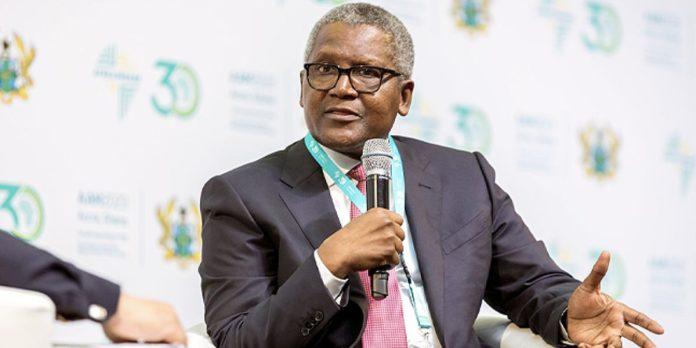
The Aliko Dangote Foundation plans to collaborate with state governments to help approximately two million vulnerable Nigerian women acquire ownership stakes in the Dangote Petroleum Refinery and Petrochemicals Limited through its initial public offering (IPO).
Aliko Dangote, President and Chief Executive Officer of Dangote Industries Limited, announced the initiative during engagements connected to the 81st United Nations General Assembly in New York.
Proposed Partnership With State Governments
According to the reports, the foundation intends to work with state governments to identify and support women who could benefit from participation in the share offering.
The initiative is presented as a way of connecting vulnerable groups to investment opportunities and enabling them to build long-term financial assets through equity ownership.
The specific selection criteria, funding arrangements, allocation procedures and the number of shares to be made available to beneficiaries would need to be established through the foundation’s implementation framework.
Refinery IPO and Broader Investment Context
The announcement comes amid significant public interest in the Dangote refinery’s IPO.
Reuters reported that the share offering attracted substantial retail-investor demand, while investment platforms experienced disruptions linked to high traffic during the offering.

Reuters
+1
The initiative involving vulnerable women is separate from the broader question of how investors participate in the public offering and the financial risks associated with equity investment.
Shares can fluctuate in value, and ownership does not guarantee a fixed return.
Women’s Economic Participation
The proposed partnership places financial inclusion and women’s economic participation at the centre of the foundation’s reported initiative.
For the scheme to achieve its stated objectives, details concerning beneficiary protection, investment education, transparency and ongoing management of shareholdings would be important.
The announcement also highlights the potential role of private-sector initiatives in complementing government efforts to support economically vulnerable communities.