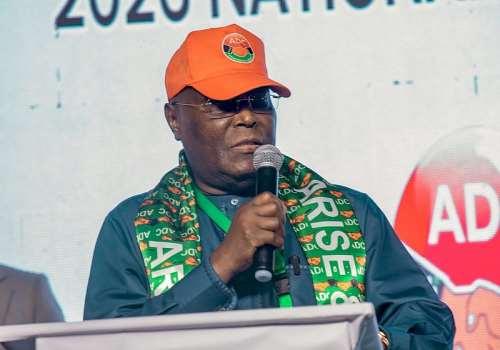
Former Vice President and African Democratic Congress presidential candidate Atiku Abubakar has backed organised labour’s demand for a substantial increase in Nigeria’s minimum wage, arguing that the current ₦70,000 wage floor no longer adequately reflects the cost of living.
Atiku made the position public on Sunday through Phrank Shaibu, Director of Strategic Communications of the ADC Presidential Campaign Council.
He argued that the removal of the petrol subsidy had contributed to higher costs for transport, food and housing, putting pressure on household incomes.
Atiku Points to Rising Living Costs
According to Atiku, workers are facing increased expenses across essential areas of household consumption while their statutory minimum wage remains unchanged.
“Fuel, transport, food and rent have devoured their earnings,” he said.
Atiku used petrol prices to illustrate the purchasing-power challenge, arguing that at a pump price of about ₦1,400 per litre, a worker earning the ₦70,000 monthly minimum wage would be able to purchase only 50 litres of petrol before accounting for food, housing, transport and other necessities.
The former vice president described the situation as evidence that workers require a wage structure that more closely reflects prevailing living costs.
Labour Wage Debate
Nigeria’s current national minimum wage of ₦70,000 followed the Federal Government’s approval of the new wage regime in 2024.
The renewed debate comes amid continuing concerns about inflation, transportation costs and household purchasing power.
Atiku has also linked the issue to the broader economic consequences of the petrol subsidy removal, arguing that the policy has increased the cost burden on workers without sufficient protection for vulnerable households.
His comments form part of his wider economic criticism of the Tinubu administration as political parties prepare for the 2027 presidential election.
ADC Candidate Proposes Wage Increase
Atiku has separately pledged that, if elected president in 2027, his administration would raise the minimum wage from the beginning of his tenure.
The position places workers’ income, purchasing power and the cost of living among the issues likely to feature prominently in the emerging presidential campaign debate.
The question of what constitutes an adequate minimum wage remains a matter of negotiation among government, organised labour and employers, with the appropriate wage level dependent on factors including inflation, productivity, government finances and the cost of essential goods and services.