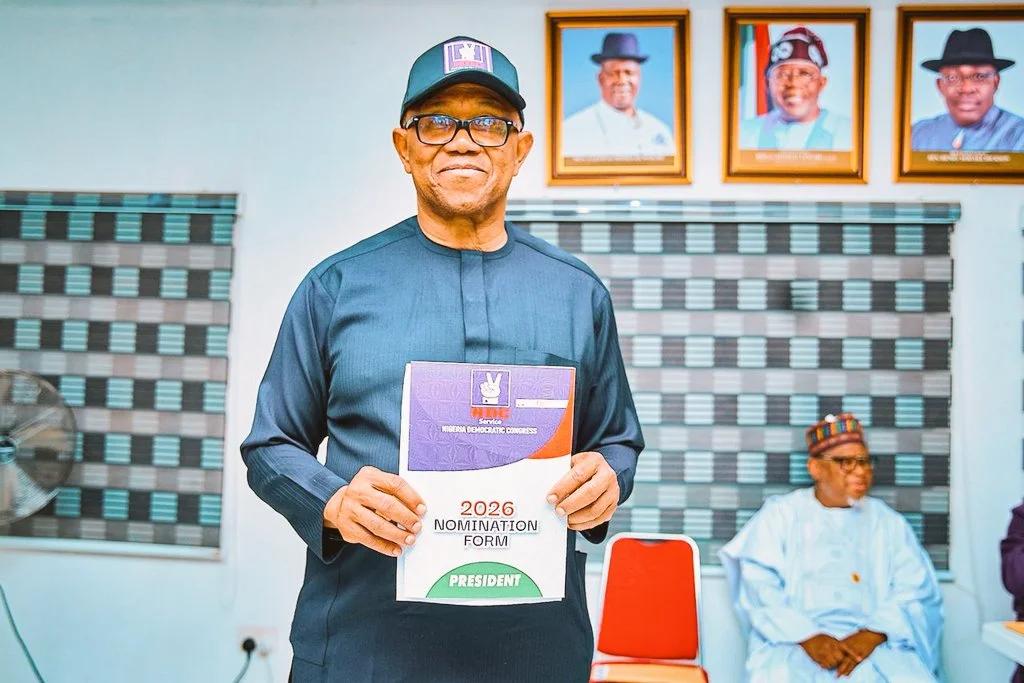

Peter Obi, presidential candidate of the Nigeria Democratic Congress (NDC), has pledged to restore petrol subsidies if elected president in 2027, saying his administration would first tackle corruption associated with the scheme.
Obi made the declaration on Monday at a town hall meeting organised for the Obi–Kwankwaso presidential ticket in Sokoto.
His latest position represents a shift from remarks he made in August, when he defended the removal of petrol subsidies and argued that mismanagement of the proceeds was not sufficient reason to reverse the policy.
Obi Links Subsidy Policy to Corruption
Speaking in Sokoto, Obi argued that corruption remained a central problem in Nigeria’s management of public resources.
He said his proposed administration would address corruption across sectors and indicated that restoring the subsidy would follow efforts to tackle the practices he considers responsible for undermining the scheme.
The pledge places fuel pricing and public expenditure among the issues likely to feature prominently in the 2027 election campaign.
A Shift From His Earlier Position
Obi’s latest statement contrasts with his comments at the Nigerian Bar Association’s 2026 conference in Port Harcourt.
At that event, he maintained that subsidy removal was necessary and argued that mismanagement of the resulting proceeds should not be used as the basis for reversing the policy.
His remarks in Sokoto suggest that he is now proposing a different approach, under which subsidy restoration would follow anti-corruption measures.
The two positions raise important questions about the proposed timing, structure and financing of any future subsidy arrangement.
Questions About Implementation
Restoring a fuel subsidy would require decisions about the level of government support, the beneficiaries, the method of payment and the source of funding.
A workable policy would also need safeguards against diversion of funds, false claims and other forms of abuse.
Obi’s statement establishes a campaign commitment, but the information provided does not specify the proposed subsidy rate, the expected fiscal cost or the mechanisms through which corruption would be addressed before implementation.
Fuel Prices and Household Costs
Petrol pricing remains an important economic issue because it affects transportation, distribution costs and the prices of goods and services.
Any subsidy arrangement would need to balance the immediate effects on consumers against the cost to public finances and the availability of resources for other services.
Obi’s proposal introduces a renewed debate over whether subsidy restoration, following anti-corruption reforms, would form part of his wider economic programme.
The detailed policy framework will be necessary to assess how the pledge would operate in practice.