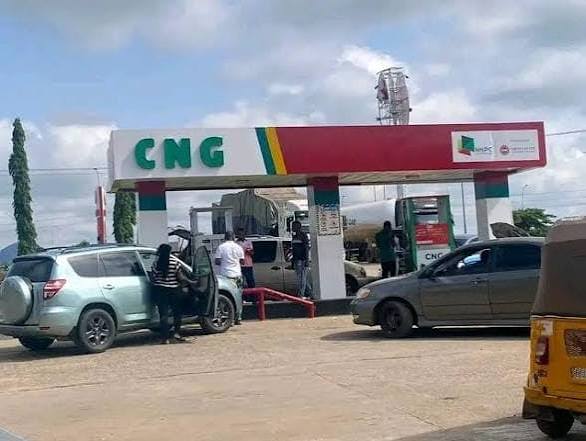
Commuters across several Nigerian states continued to pay high transport fares on Thursday, October 1, despite President Bola Tinubu’s target for transportation costs to begin falling through the deployment of Compressed Natural Gas (CNG)-powered and electric buses.
A report by The PUNCH found that the directive had yet to translate into widespread fare reductions, with passengers on several routes continuing to pay existing fares and some facing increases. Transport operators cited challenges including operating expenses and inadequate refuelling infrastructure.
Government targets lower fares through alternative fuels
On September 19, Tinubu urged state governments to accelerate the implementation of the National Affordable CNG Transit Programme, with the goal of delivering measurable reductions in transport costs from October 1, 2026.
The initiative involves expanding the deployment of CNG-powered buses and electric vehicles, alongside cooperation between federal and state authorities, transport unions and other stakeholders.
The policy is intended to reduce the cost of operating public transport and help pass savings on to passengers.
However, the availability of cheaper fuel does not automatically guarantee lower fares. The effect depends on the number of vehicles deployed, the routes covered, access to refuelling facilities and how transport operators set their prices.
Implementation remains uneven
According to The PUNCH, some states had introduced subsidised or free transport services, but coverage remained limited in several locations. Many commuters continued to rely on commercial vehicles whose operators faced fuel, maintenance and spare-parts expenses.
The situation illustrates the difference between announcing a national target and achieving reductions across individual routes.
Even where CNG buses are available, the extent of savings experienced by passengers will depend on service frequency, passenger capacity, fares and the number of people who can access the scheme.
Commuters await tangible relief
Transport costs affect household budgets and the ability of workers, students and traders to travel regularly. Sustained fare reductions could provide relief, but their scale and reach need to be measured against what passengers actually pay.
The October 1 target has therefore become an early test of the government’s alternative-fuel transport initiative.
Further monitoring will be needed to establish which states and routes have implemented reductions, how much fares have fallen and whether the changes can be sustained.
For commuters, the key measure of progress is not simply the deployment of new buses but whether daily transportation becomes more affordable.