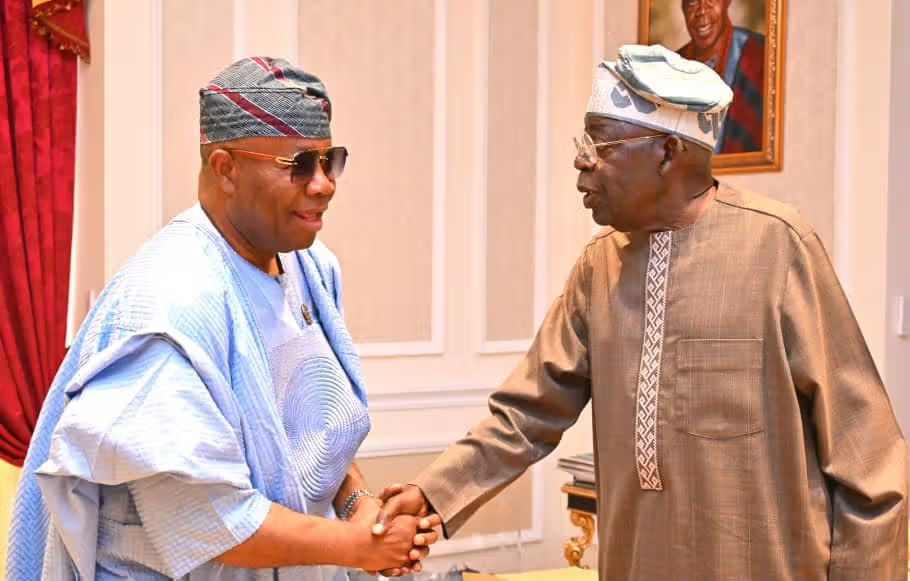
Senate President Godswill Akpabio has reaffirmed the National Assembly’s commitment to supporting President Bola Tinubu’s economic reform agenda, saying lawmakers intend to maintain their partnership with the administration and advance legislation aimed at transforming the economy.
Akpabio made the remarks on Friday while leading a delegation of federal lawmakers to visit Tinubu in Lagos as part of activities marking Nigeria’s 66th Independence Anniversary.
He said the legislature would continue working with the executive on reforms intended to improve economic management, while pointing to the passage of four major tax reform laws as evidence of its legislative support.
Legislature highlights tax reform legislation
Akpabio said some existing laws being reviewed by the National Assembly dated back to 1901 and 1939, arguing that legislative modernisation was necessary to support changes in the country’s economic system.
He cited the passage of four major tax reform laws as an example of the legislature’s role in implementing the administration’s agenda.
The Senate president said the National Assembly wanted to remain a “worthy partner” to Tinubu’s government and maintained that the reforms were intended to serve the interests of Nigerians.
The statement signals continued legislative backing for the administration’s policy direction. It does not, on its own, establish the effects of the reforms on household incomes, employment or the cost of living.
Reforms face public scrutiny
Tinubu’s economic programme has included major changes to fuel subsidies, foreign-exchange management and taxation. The government has argued that these measures are necessary to improve public finances, address structural weaknesses and create conditions for sustainable growth.
However, the reforms have also generated public debate over inflation, transportation costs, food prices and the pressure on household budgets.
Supporters of the programme have emphasised the importance of maintaining reforms long enough for their intended benefits to emerge. Critics have called for stronger measures to cushion vulnerable households against the immediate costs.
Balancing legislation and citizens’ welfare
The National Assembly’s role includes considering legislation, scrutinising government policy and exercising oversight over public spending and implementation.
Akpabio’s pledge of continued support places the legislature alongside the executive in advancing the administration’s economic programme. Lawmakers will also face scrutiny over how effectively legislation translates into measurable improvements in living standards.
The broader test for the reforms will be whether changes to the tax system and economic management can support investment and public revenue while improving access to jobs, essential services and affordable living conditions.