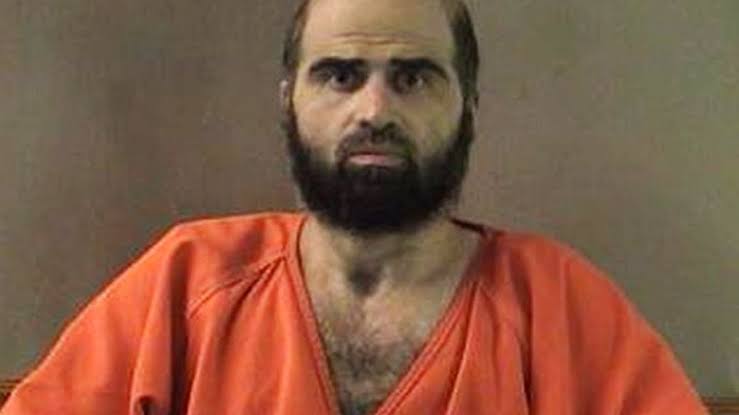
The United States military is preparing to execute former Army Major Nidal Malik Hasan by firing squad, more than 17 years after he killed 13 people and wounded 32 others in the 2009 Fort Hood shooting in Texas.
Hasan’s execution has been scheduled for December 3, 2026, at Fort Hood, according to US officials. If carried out as planned, it would mark the first US military execution since 1961 and the first military firing-squad execution since 1945.
The decision follows President Donald Trump’s approval of a recommendation by Defense Secretary Pete Hegseth that Hasan be executed by an Army firing squad.
Pentagon spokesman Sean Parnell announced the administration’s decision on Monday, writing on X that “judgement day for Hasan has finally come.” He said the Army secretary would oversee the arrangements for the execution.
Hasan, a US Army psychiatrist, was convicted in 2013 of 13 counts of premeditated murder and 32 counts of attempted murder for the November 5, 2009, attack at the Fort Hood Soldier Readiness Processing Center.
The facility was crowded with soldiers preparing for deployment, including personnel undergoing medical examinations and receiving vaccinations.
The shooting became one of the deadliest attacks ever carried out on a US military installation outside a combat zone.
During his court-martial, Hasan represented himself and acknowledged that he was responsible for the attack. He argued that he had acted to prevent American soldiers from deploying to Afghanistan and harming Muslims. He was subsequently sentenced to death.
Hasan remains on military death row at the US Disciplinary Barracks at Fort Leavenworth, Kansas. He is one of four prisoners currently held on the military’s death row.
The planned method of execution is particularly significant because firing squads have virtually disappeared from the US capital punishment system. The last known US military firing-squad execution took place in November 1945, while the last military execution of any kind occurred in 1961.
Hasan may still pursue legal avenues capable of delaying the execution. The approval by the president does not necessarily mean the execution will proceed without further litigation, as federal court proceedings can affect the timetable.
The case also comes amid renewed debate in the United States over execution methods, following recent controversies surrounding lethal injections and the Trump administration’s broader push to expand available methods for carrying out federal death sentences.
For victims’ families and survivors of the Fort Hood attack, however, the planned execution represents the latest development in a case that has remained unresolved for more than a decade.